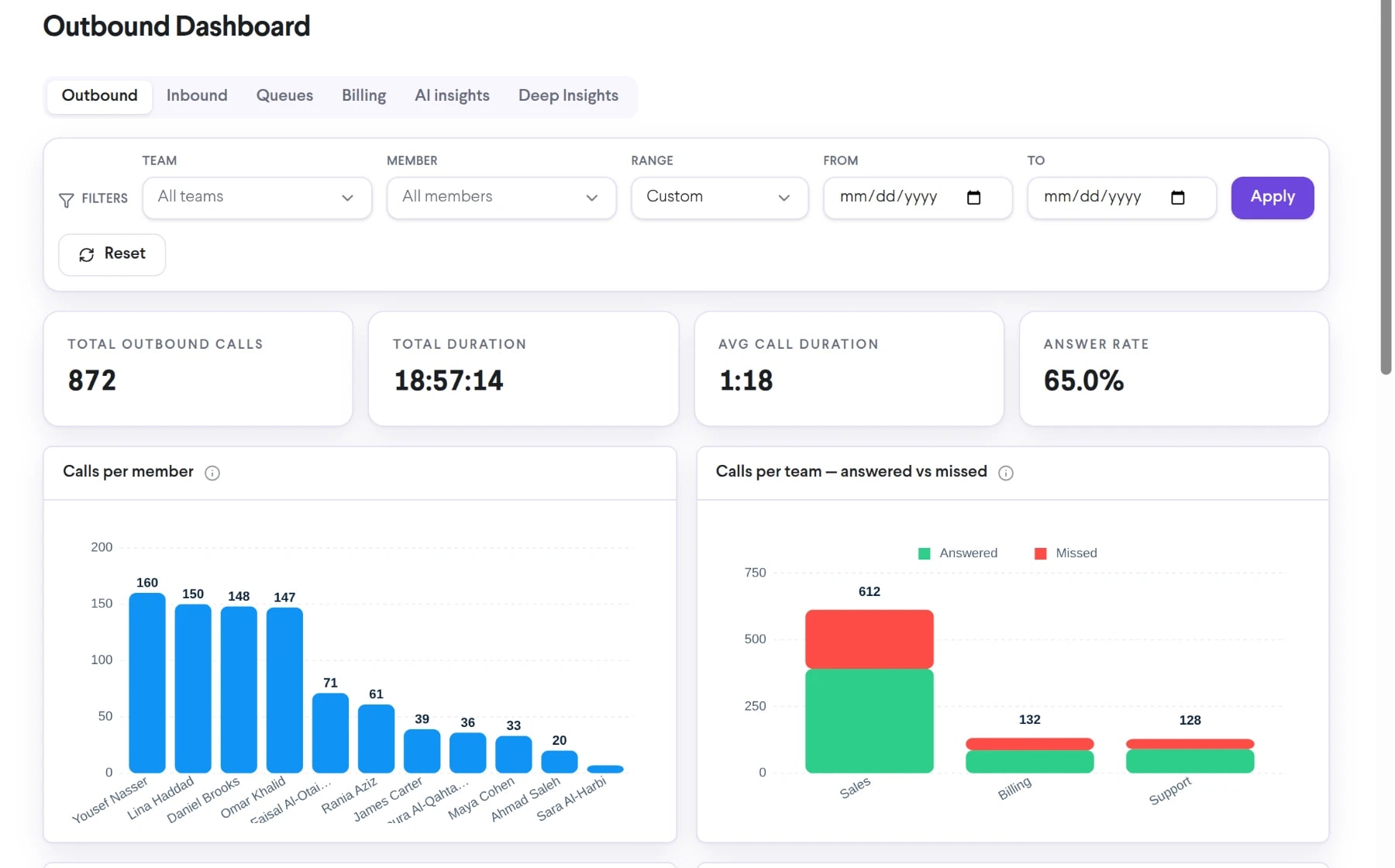
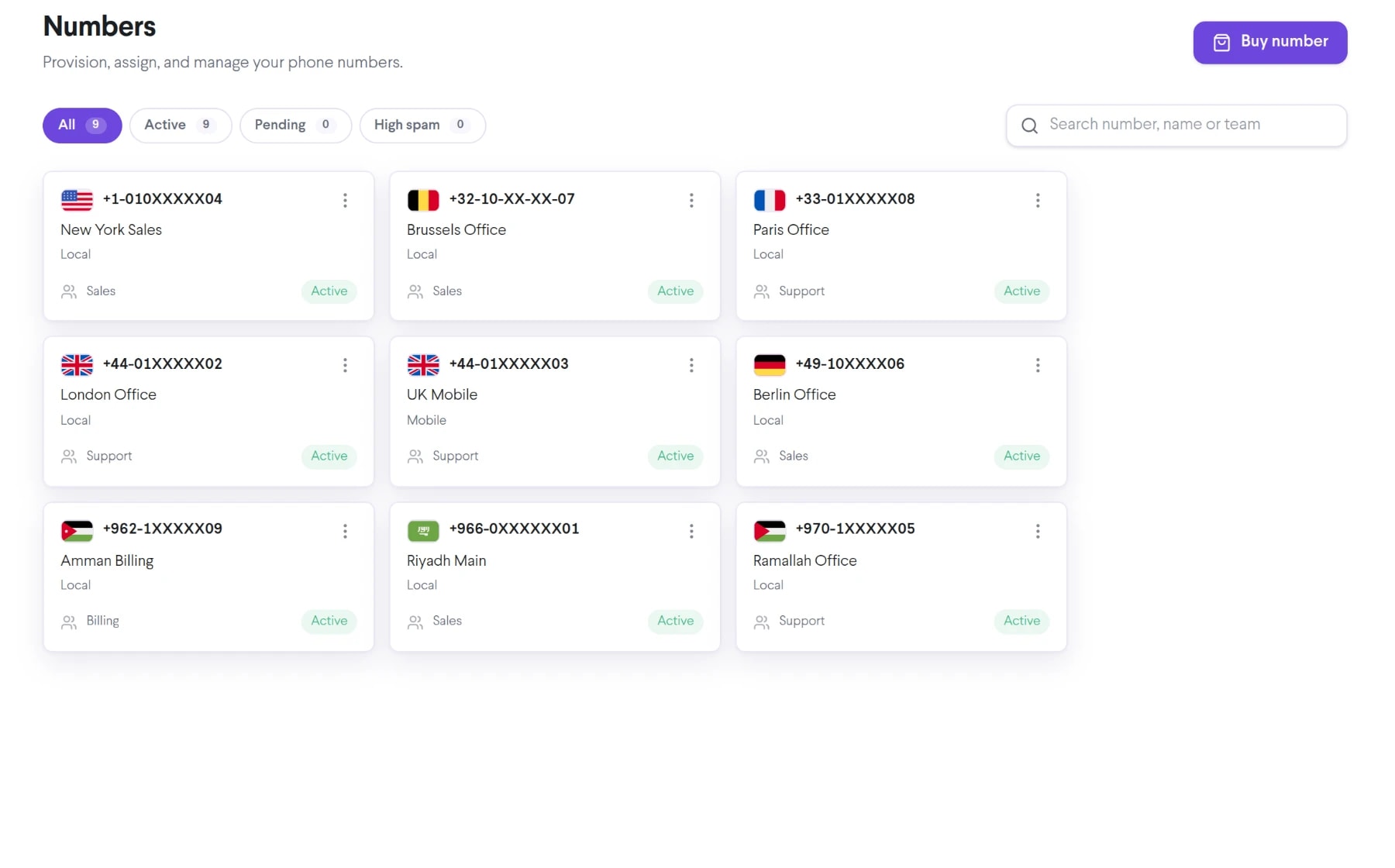
Know why shoppers call. Fix it before they churn.
Route stores, ecommerce support and returns from one platform, then, with AI Call Intelligence on, see why customers call, who keeps calling back and which calls a manager must hear.
7-day free trial · no card · usually verified within 1 business day · onboarding call · then set up with a number in about 2 minutes
- Why customers call, week by week
- Refund and cancellation escalations
- Repeat callers and their issues
- Search calls by meaning

Trusted by 1,000+ companies






Your customers tell you what is broken. Every day, on the phone.
Order calls pile up
Delivery, returns and refund calls spike after every campaign, and nobody can say which issue is driving them.
The same shopper calls back
A customer calls three times about one refund. Each agent starts from zero.
Threats get lost
A customer mentions a lawyer or a competitor. The manager hears about it when the chargeback arrives.
What a retail care team runs on TalkChief.
Shipped features, shown with fictional demo data.
Refund threats and cancellations, flagged the same day.
With AI Call Intelligence on, AI reads your recorded calls and flags the ones a supervisor must see: a legal threat over a refund, a customer asking for a manager, a complaint left unresolved. Each alert shows the severity, the reason and the customer’s exact words.
- High, Medium and Low severity
- Write your own rules in plain words
- Alerts by email or in a Cowork channel
AI Call Intelligence add-on on Growth and Professional: $10 per member per month, 1,500 minutes per member included, then $0.01 per minute.
See AI escalations
See who keeps calling about the same order.
Deep Insights lists the customers who called two or more times in the period and what they keep raising, so a supervisor can open the calls and take ownership before the customer gives up.
- Repeat callers ranked by calls
- The issues each one keeps raising
- Open their calls in one click
AI Call Intelligence add-on on Growth and Professional: $10 per member per month, 1,500 minutes per member included, then $0.01 per minute.
See Deep Insights
Find the calls about a refund, in any wording.
Search transcribed calls by meaning, not only exact words. “Customer wants a refund” also finds “charged twice” and “money back”, across English, Arabic, Italian, French and Spanish. Open the transcript and summary from any result.
- Exact words first, then similar meaning
- Filter by team, member and who said it
- Works across English, Arabic, Italian, French and Spanish
AI Call Intelligence add-on on Growth and Professional: $10 per member per month, 1,500 minutes per member included, then $0.01 per minute.
See call search
Stores, ecommerce care and returns on one platform.
Give each store and service line its own number and route it through working hours, an IVR menu and queues. Queues ring by agent skill and order, and overflow goes where you decide.
- Numbers in 90+ countries (availability varies by market)
- Queues by agent skill and order
- Inbound and queue dashboards

How a shopper call moves through TalkChief.
- 01
Store or brand line
Each number carries its own working hours and menu.
- 02
Order, returns or store
The IVR sends the caller to the right queue.
- 03
Skilled agent answers
Queues ring by agent skill and order; failover covers busy times.
- 04
AI reads the call
With AI Call Intelligence on: summary, reason, outcome and any escalation.
What we protect, and what stays your call.
Security on every plan
- AES-256 encryption at rest and TLS in transit
- Call recordings and files encrypted in object storage
- Encrypted, access-controlled databases
- Roles for admins, supervisors and agents; supervisors see only their teams
Keep card numbers off ordinary calls
TalkChief does not claim PCI DSS certification. Do not take card details over recorded or transcribed calls unless your payment-security team approves the process.
You decide what is recorded and analysed
Call recording is on Growth (kept 1 year) and Professional (kept 2 years). AI transcription is switched on for the company, a team or a member, for the call types you pick; internal calls are never transcribed. Tell callers about recording and transcription as your local rules require.
Official references: PCI DSS document library (PCI Security Standards Council) · Guide to the Saudi Personal Data Protection Law (Saudi Data & AI Authority)
TalkChief for retail: common questions.
Plans: Essential $8, Growth $13, Professional $17 per member per month, billed annually.
Compare plansCan TalkChief route callers to a specific store?
Yes. Give each store its own number, or use an IVR menu, and route through working hours, queues and ring groups with a central fallback. You keep the store directory and hours up to date in the call flow editor.
Can agents take card details over a TalkChief call?
TalkChief does not claim PCI DSS certification, so do not treat ordinary calls, recordings or transcripts as an approved payment channel. Define the payment process with your payment-security stakeholders.
Can TalkChief show order information?
Call activity syncs to HubSpot, Pipedrive, Zoho CRM, Powerlink and Comeunity when the integration is connected and enabled. Showing order data during a call needs a custom integration with your order system; the Click-to-Call API starts calls and completed-call webhooks send call events to your systems.
How do we see why customers call?
Turn on AI Call Intelligence (Growth or Professional, $10 per member per month). Deep Insights groups your transcribed calls by reason week by week, shows the share left unresolved, links issues to products and outcomes, and lists repeat callers and competitor mentions.
Does TalkChief include mobile apps for store staff?
Yes. TalkChief runs in the browser and has apps for Windows and macOS. The TalkChief Cowork apps for iOS and Android (Professional plan) include the business phone dialer, so store staff can take and place business calls on their phone.