Confirm deliveries by AI. Catch the callbacks with no time.
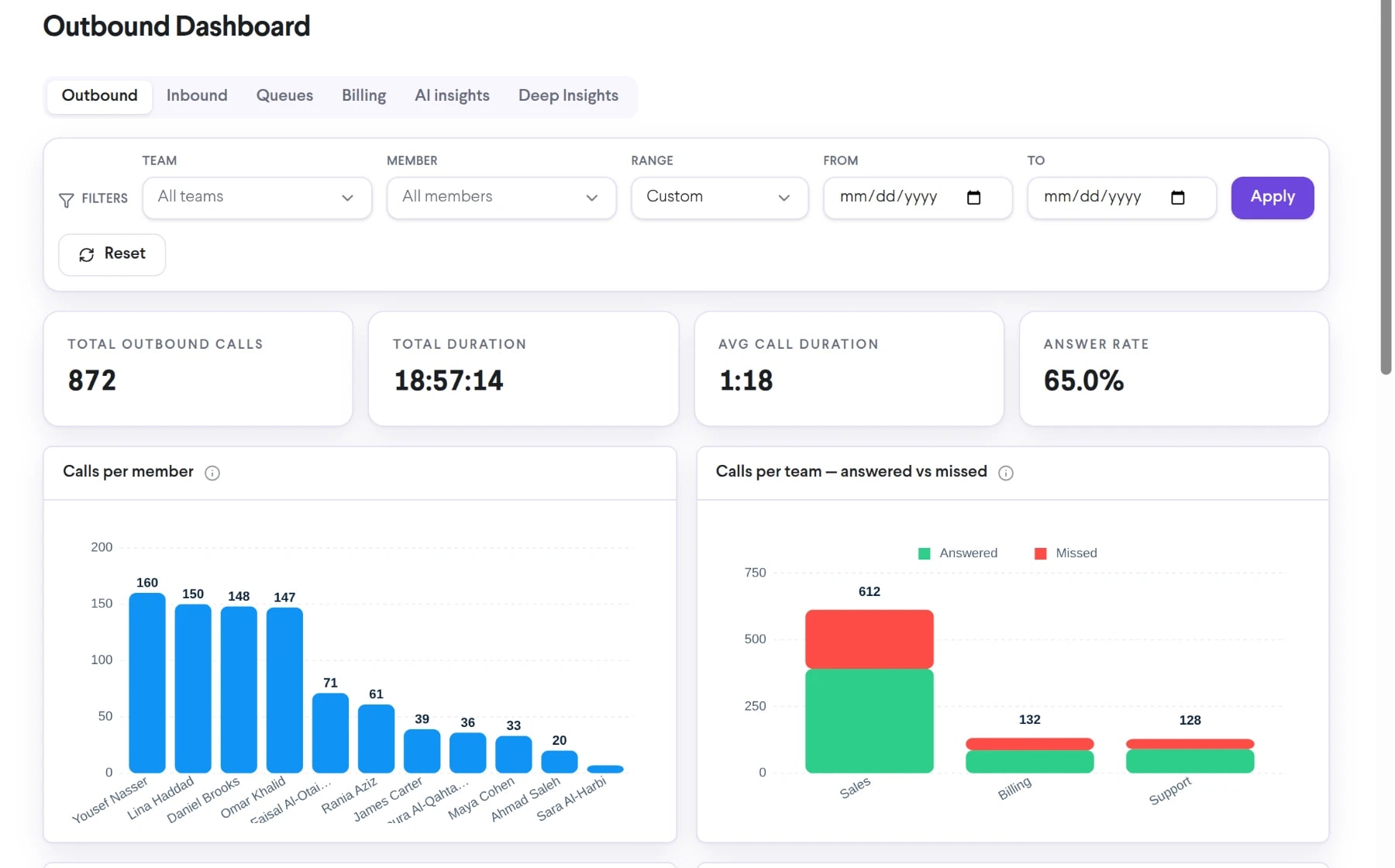
Run delivery confirmations with AI outbound campaigns, see outbound activity per driver desk and team, and, with AI Call Intelligence on, flag the shipment calls where a callback was promised without a time.
7-day free trial · no card · usually verified within 1 business day · onboarding call · then set up with a number in about 2 minutes
- Outbound dashboard per team
- AI delivery-confirmation campaigns
- Issue → product → outcome
- Custom AI rules in plain words
Trusted by 1,000+ companies






Every failed delivery starts with a phone call.
Confirmation calls by hand
Dispatchers call recipients one by one to confirm addresses and time slots.
Promises without a time
“Someone will call you back” turns into a second, angrier call the next day.
No view across depots
Each depot runs its own phones, so nobody sees missed calls across the network.
What a delivery operation runs on TalkChief.
Shipped features, shown with fictional demo data.
Delivery confirmations that dial themselves.
Upload the day’s drops and an AI voice agent calls each recipient inside your calling window, confirms or reschedules, retries no-answers and checks the do-not-call list before every dial.
- Calling window, timezone and retries
- Concurrent calls you control
- Transfer to dispatch when asked
AI Voice Agents: $0.15 per connected minute, or the usage-based cost of the call if that is higher, charged from your wallet. A call starts only when the wallet holds at least $10.
See outbound campaigns
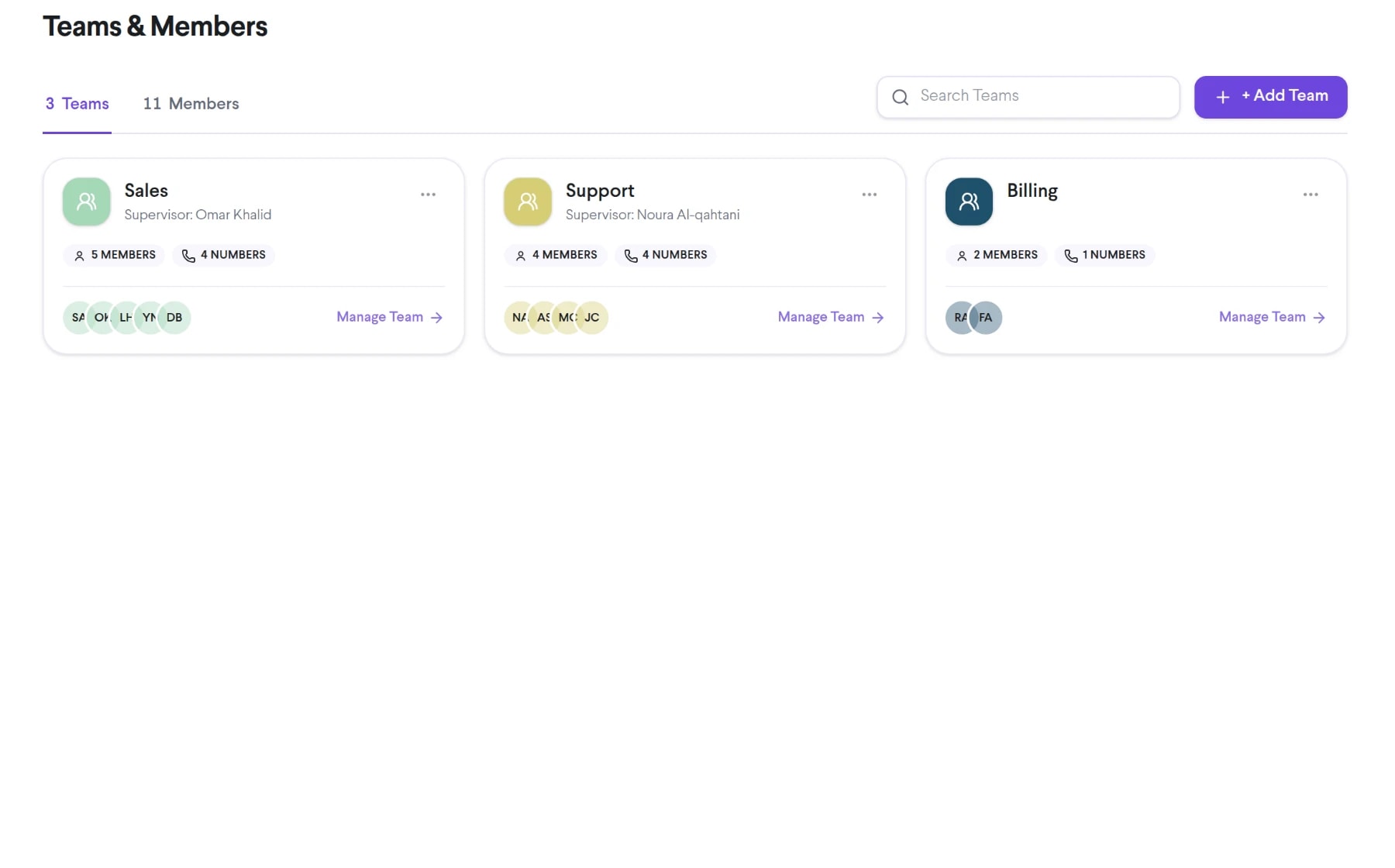
A team per depot, one view of the network.
Group members into teams with supervisors and numbers per depot or service. Dashboards filter by team, so a regional manager sees every depot and a depot lead sees their own.
- Teams with supervisors
- Numbers per team
- Supervisors see only their teams
Every issue linked to the service and how it ended.
With AI Call Intelligence on, Deep Insights links each issue customers raise to the product or service it was about and to the outcome: resolved, not resolved or escalated.
- Issue → product → outcome
- Why customers call, week by week
- Repeat callers and their issues
AI Call Intelligence add-on on Growth and Professional: $10 per member per month, 1,500 minutes per member included, then $0.01 per minute.
See Deep Insights
Flag callbacks promised without a time.
Write an escalation rule in plain words, such as “agent promises a callback but gives no day or time”, test it on recent calls and get the alert in a Cowork channel or by email.
- Rules in plain words
- Tested on recent calls before going live
- Alerts in Cowork or by email
AI Call Intelligence add-on on Growth and Professional: $10 per member per month, 1,500 minutes per member included, then $0.01 per minute.
See AI escalations
How a shipment call moves through TalkChief.
- 01
Depot or tracking line
Each number belongs to a team with its own hours.
- 02
Tracking, delivery or claims
The IVR sends the caller to the right queue.
- 03
Agent or dispatch answers
Queues and ring groups reach the team on shift.
- 04
AI checks the promise
With AI Call Intelligence on, your rule flags calls where a callback had no time.
What we protect, and what stays your call.
Security on every plan
- AES-256 encryption at rest and TLS in transit
- Call recordings and files encrypted in object storage
- Encrypted, access-controlled databases
- Roles for admins, supervisors and agents; supervisors see only their teams
Shipment status lives in your system
TalkChief does not track shipments. Location, custody and delivery status come from your logistics platform; the AI agent can read them only through an API or MCP tool you connect.
You decide what is recorded and analysed
Call recording is on Growth (kept 1 year) and Professional (kept 2 years). AI transcription is switched on for the company, a team or a member, for the call types you pick; internal calls are never transcribed. Tell callers about recording and transcription as your local rules require.
Official references: EPCIS & Core Business Vocabulary (GS1) · Essential Cybersecurity Controls (Saudi National Cybersecurity Authority) · Guide to the Saudi Personal Data Protection Law (Saudi Data & AI Authority)
TalkChief for logistics: common questions.
Plans: Essential $8, Growth $13, Professional $17 per member per month, billed annually.
Compare plansCan TalkChief track a shipment?
No. TalkChief routes and analyses calls about shipments. Authoritative status comes from your logistics system; an AI agent can look it up only through an API or MCP tool you connect.
Can an AI agent confirm deliveries?
Yes. AI outbound campaigns call your list inside the calling window you set, with retries and a do-not-call check before every dial, and transfer to a person when asked. AI Voice Agents cost $0.15 per connected minute, or the usage-based cost of the call if that is higher, from your wallet.
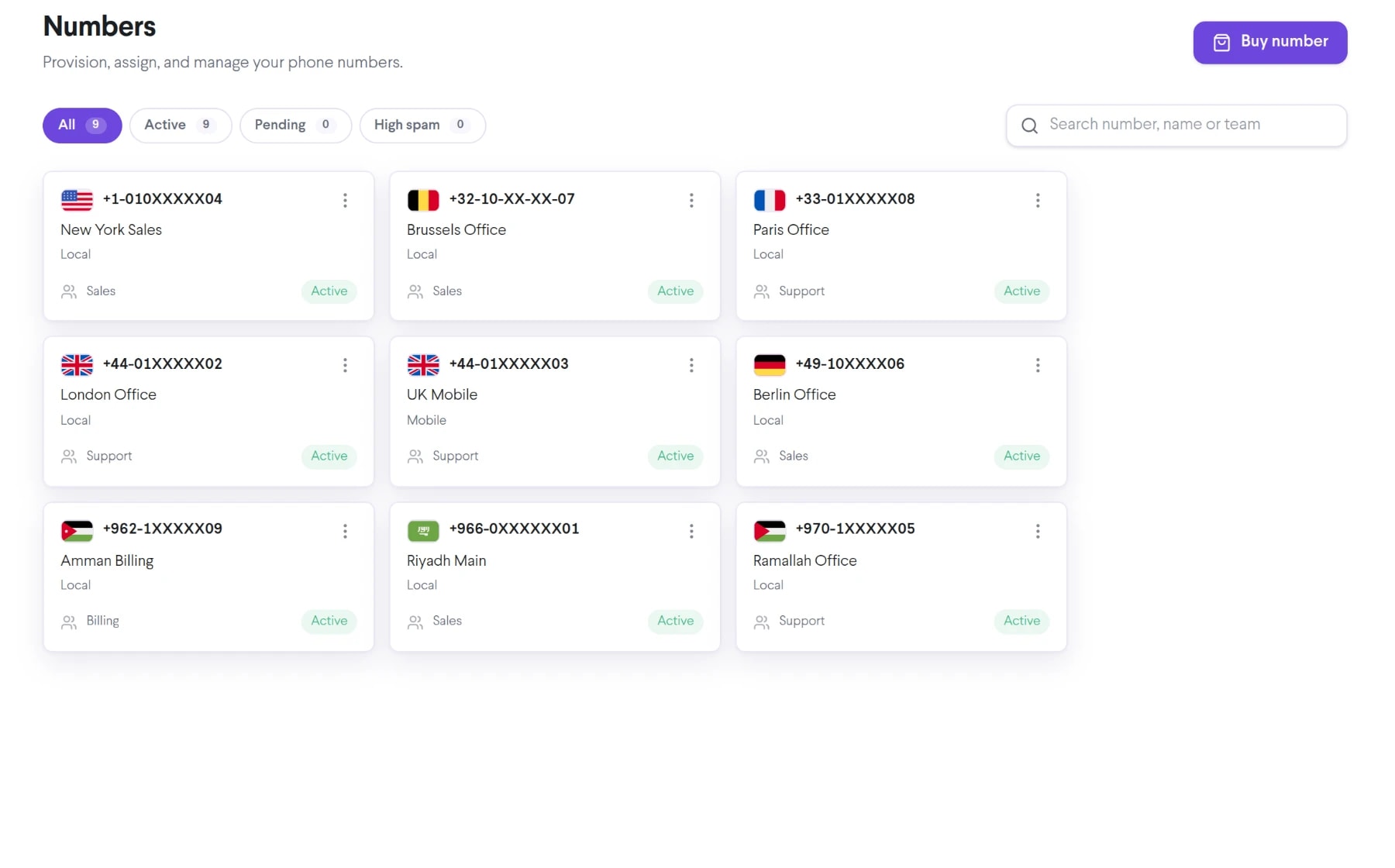
Can different depots have local numbers?
Yes, subject to number availability in each country. Assign numbers to depot teams and give each its own call flow and working hours.
Do you offer a predictive dialer for human agents?
No. A human-operated Power Dialer is available as an Enterprise-only add-on on request. AI outbound campaigns are run by AI voice agents.
Can TalkChief connect to a TMS or WMS?
There is no prebuilt TMS or WMS connector. Use completed-call webhooks, the Click-to-Call API, the AI agent’s API and MCP tools, or a scoped integration.