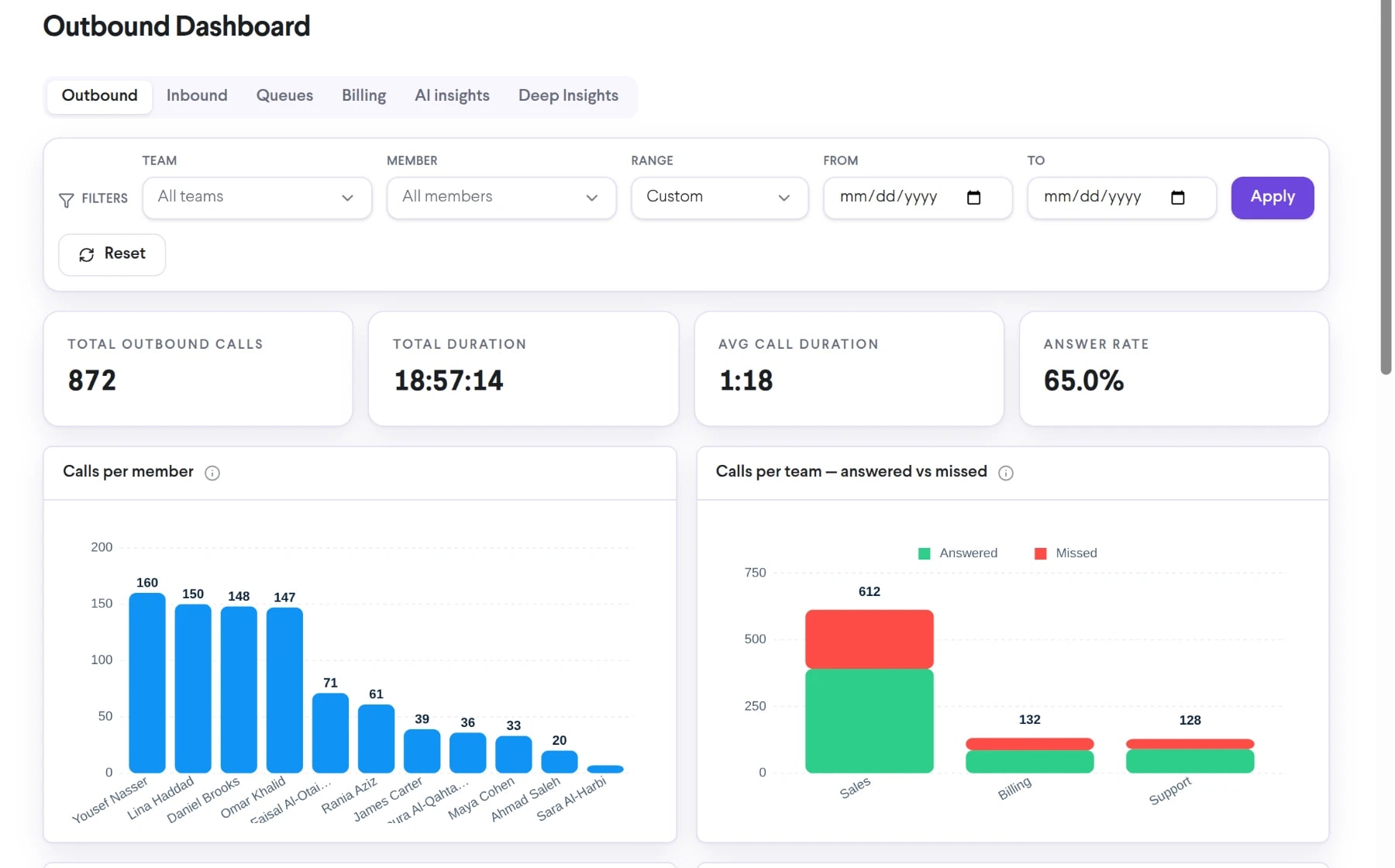
Coach agents on live calls. Prove quality to every client.
On Professional, supervisors listen, coach and join live calls; queues dashboards show service level per programme; and with AI Call Intelligence on, you see which agent needs coaching on which kind of call.
7-day free trial · no card · usually verified within 1 business day · onboarding call · then set up with a number in about 2 minutes
- Listen, Coach and Join live calls
- Coaching heatmap per agent and reason
- Service level per queue
- Custom AI rules per client

Trusted by 1,000+ companies






Clients pay for quality you cannot see at scale.
QA samples a handful of calls
Supervisors score a few calls a week and hope they are representative.
Coaching after the fact
By the time a bad call is reviewed, the agent has repeated the same mistake on many more.
Every client wants its own report
Service level, abandoned calls and escalations, per programme, every week.
What a BPO runs on TalkChief.
Shipped features, shown with fictional demo data.
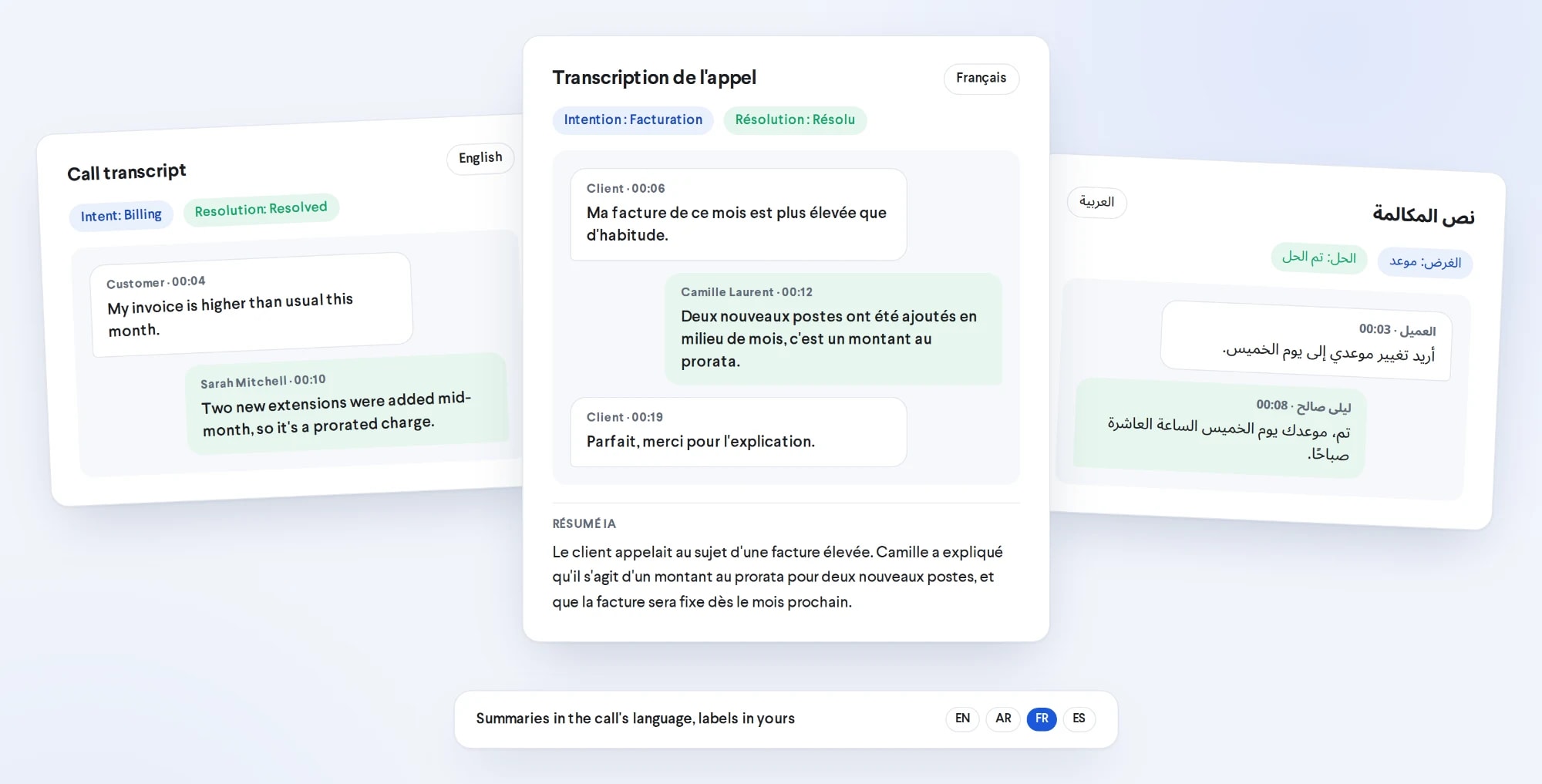
See who needs coaching, and on which kind of call.
With AI Call Intelligence on, Deep Insights shows resolution rate per agent and call reason, plus a member scorecard with sentiment, member tone, talk share and escalations. Pair the weakest agent with the strongest on that exact call type.
- Resolution by member and reason
- Member scorecard
- Results per team
AI Call Intelligence add-on on Growth and Professional: $10 per member per month, 1,500 minutes per member included, then $0.01 per minute.
See Deep Insights
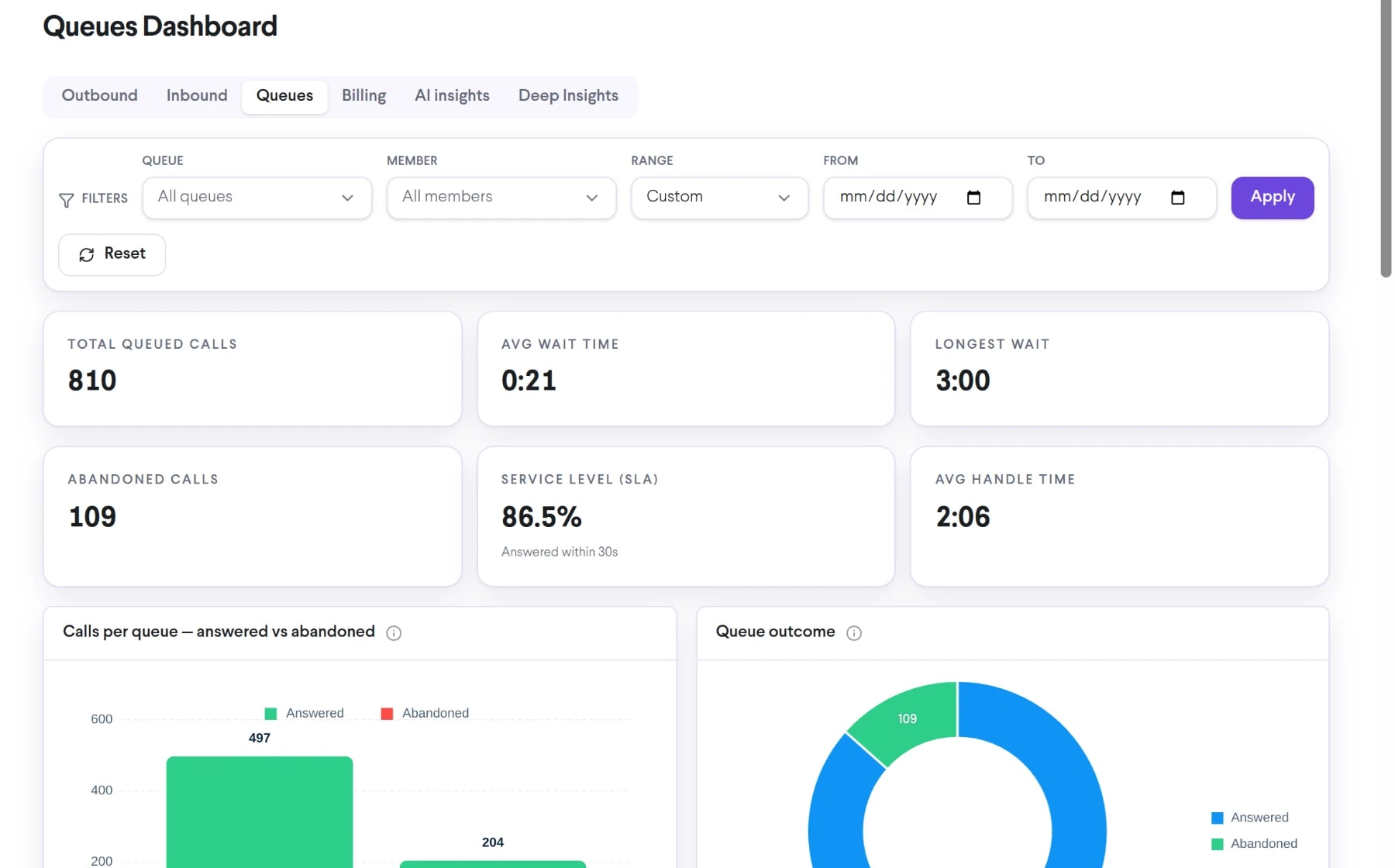
Service level per programme, not per building.
Run a queue per client programme with its own strategy, by agent skill and order, and report queued calls, wait times, abandoned calls, service level and handle time for each.
- Queue strategy by agent skill and order
- Service level answered within 30 s
- Filter by queue, member and date
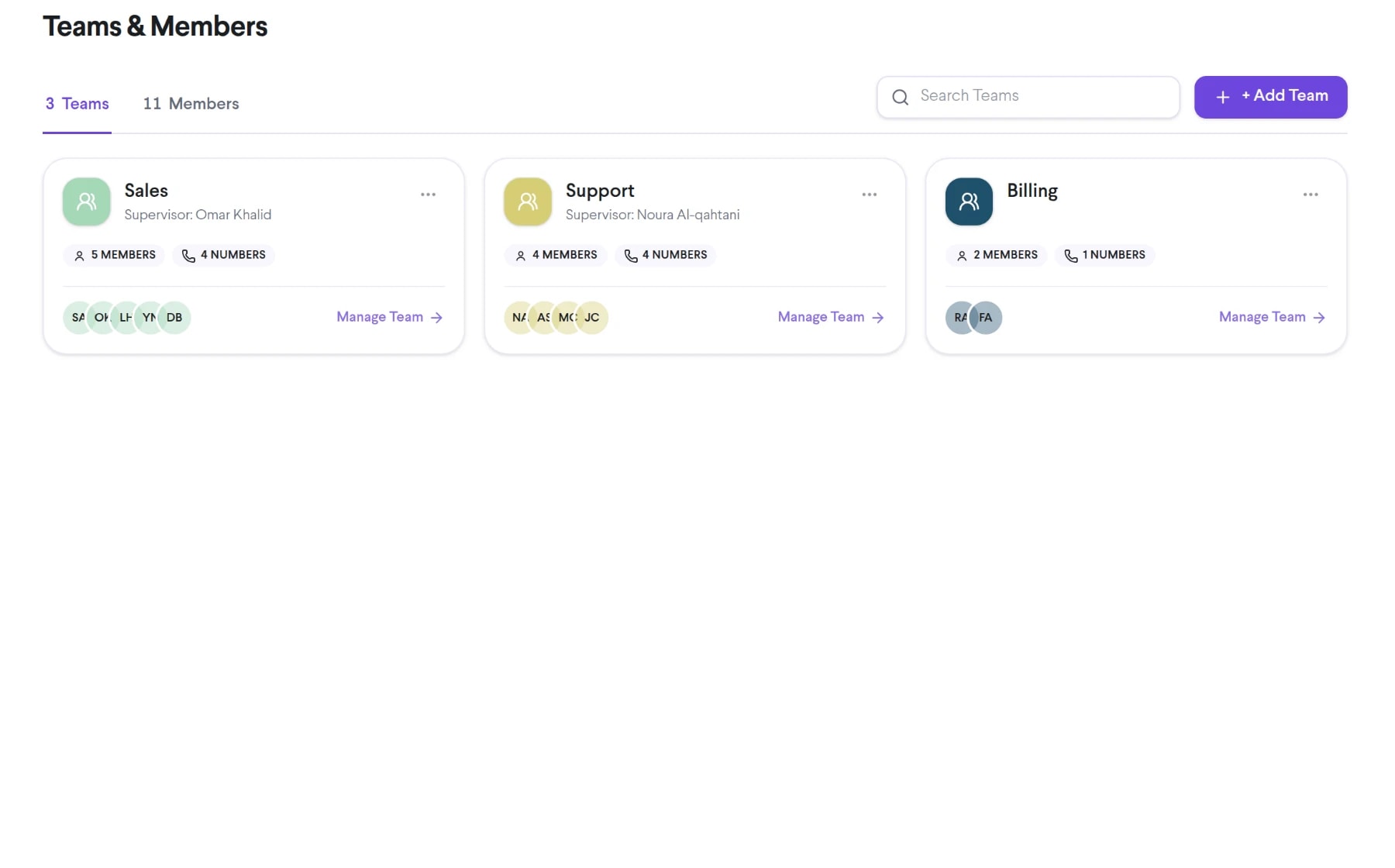
A team per client, with its own supervisors.
Group agents into teams with supervisors and numbers for each programme. Supervisors see only their own teams, and dashboards filter by team.
- Teams with supervisors and numbers
- Supervisors see only their teams
- Agent break statuses for shifts
Each client’s quality rules, checked on every analysed call.
Write escalation rules in plain words for the whole company or a team, test them on recent calls and send alerts to the programme’s Cowork channel or by email.
- Rules per company or team
- Tested on recent calls
- Alerts in Cowork or by email
AI Call Intelligence add-on on Growth and Professional: $10 per member per month, 1,500 minutes per member included, then $0.01 per minute.
See AI escalations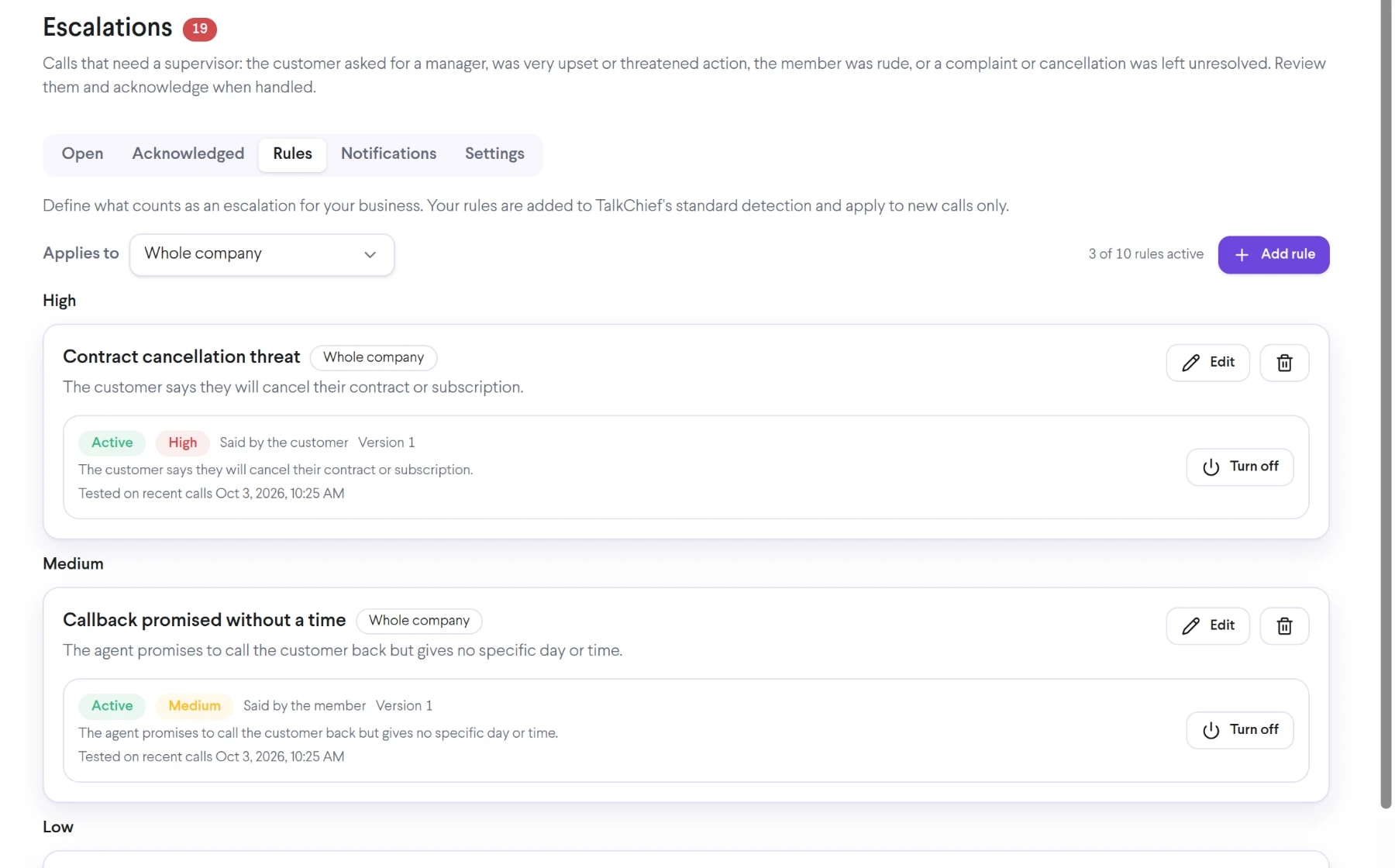
How a programme call moves through TalkChief.
- 01
Client number rings
Each programme has its own numbers and call flow.
- 02
Programme queue
Agents answer by skill and order inside that queue.
- 03
Supervisor coaches live
Listen, Coach or Join from Live Calls (Professional).
- 04
AI reviews the call
With AI Call Intelligence on: escalations, client rules and coaching insights per agent.
What we protect, and what stays your call.
Security on every plan
- AES-256 encryption at rest and TLS in transit
- Call recordings and files encrypted in object storage
- Encrypted, access-controlled databases
- Roles for admins, supervisors and agents; supervisors see only their teams
Client separation is your design
Teams, roles and per-team rules separate programmes inside one company. Validate isolation, data access and retention against each client contract; TalkChief does not claim ISO 18295 or other certification.
You decide what is recorded and analysed
Call recording is on Growth (kept 1 year) and Professional (kept 2 years). AI transcription is switched on for the company, a team or a member, for the call types you pick; internal calls are never transcribed. Tell callers about recording and transcription as your local rules require.
Official references: ISO 18295-1:2017 customer contact centres (International Organization for Standardization) · Essential Cybersecurity Controls (Saudi National Cybersecurity Authority) · Guide to the Saudi Personal Data Protection Law (Saudi Data & AI Authority)
TalkChief for BPO: common questions.
Plans: Essential $8, Growth $13, Professional $17 per member per month, billed annually.
Compare plansCan supervisors coach agents during a live call?
Yes, on the Professional plan. From Live Calls a supervisor can Listen silently, Coach (only the agent hears) or Join the call three-way.
Can one TalkChief account run several client programmes?
Yes. Use teams, queues, numbers and supervisors per programme; supervisors see only their teams. Validate isolation requirements against each client contract.
Does TalkChief guarantee an SLA?
No SLA or performance outcome is promised on this page. The queues dashboard reports service level, wait times and abandoned calls so you can measure against each client’s definition.
How does AI QA work?
With AI Call Intelligence on (Growth or Professional, $10 per member per month, 1,500 minutes per member included), recorded calls are transcribed, summarised, scored for sentiment and checked for escalations; Deep Insights adds resolution by member and reason and coaching tips.
Can TalkChief integrate with each client CRM?
HubSpot, Pipedrive, Zoho CRM and PhoneBridge, Powerlink and Comeunity receive call activity when connected and enabled. Other systems use the Click-to-Call API, the AI Transcription API or completed-call webhooks.