Citizen calls, routed and heard, in Arabic and English.
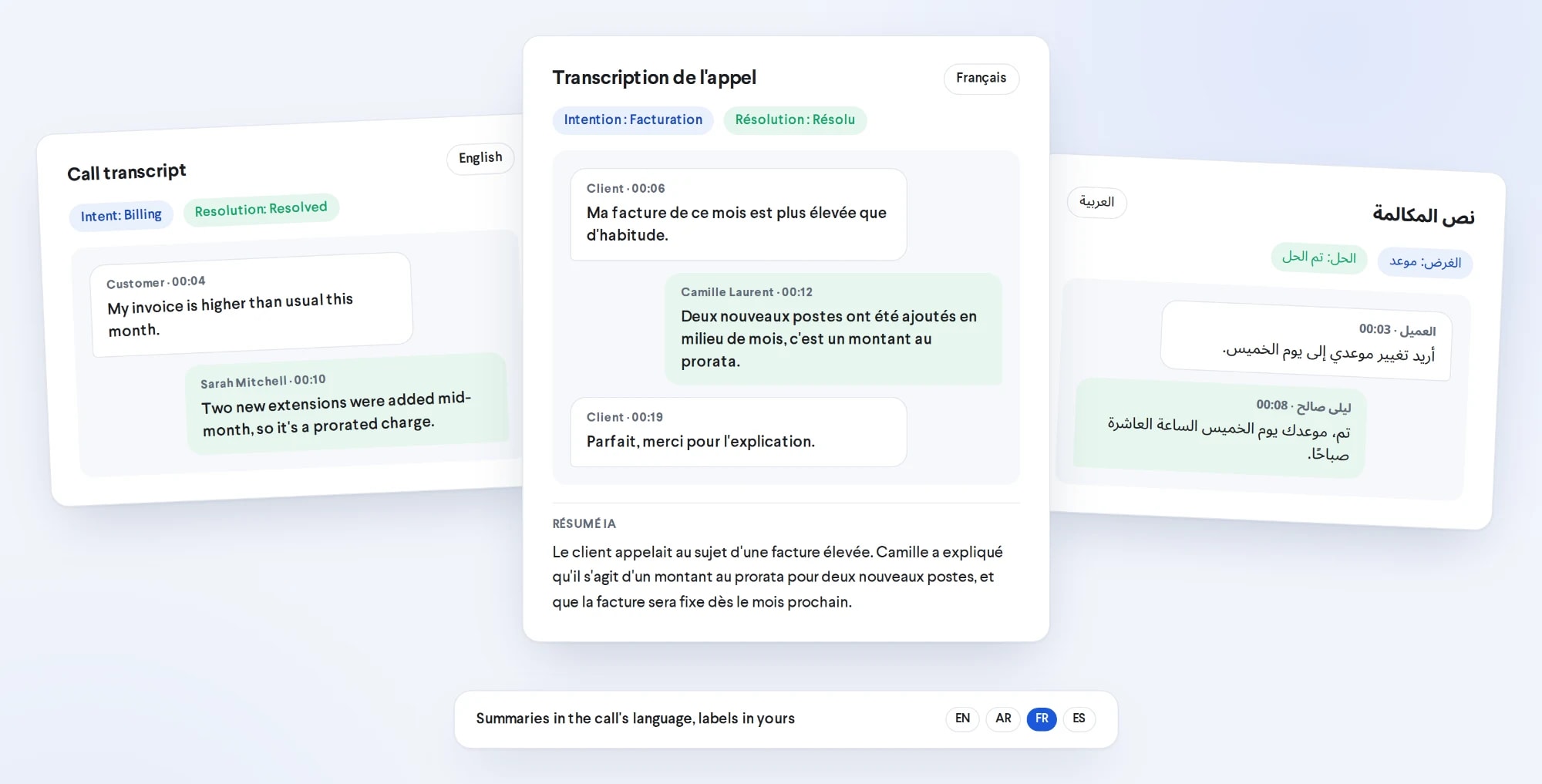
Run citizen-service lines with IVR by service and region, queues with service level, and, with AI Call Intelligence on, transcripts in English, Arabic, Italian, French and Spanish plus alerts for complaints a supervisor must hear.
7-day free trial · no card · usually verified within 1 business day · onboarding call · then set up with a number in about 2 minutes
- IVR by service and region
- Queues with service level
- English, Arabic, Italian, French and Spanish transcripts
- AES-256 at rest, TLS in transit
Trusted by 1,000+ companies






Citizens judge the agency by its phone line.
Long waits, no visibility
Callers wait on hold, and the service lead cannot see wait times or abandoned calls by service.
Complaints are buried
A serious complaint on one call out of thousands is found weeks later, if ever.
Bilingual service is hard to review
Supervisors cannot review calls in a language they do not speak.
What a citizen-service center runs on TalkChief.
Shipped features, shown with fictional demo data.
One public number, every service behind it.
Route by service, region and language with an IVR menu, working hours per team and queues for each programme desk. Publish holiday hours and announcements yourself in the call flow editor.
- IVR menu by service
- Working hours and holiday routes
- Hold music and announcements

Service level by desk, every day.
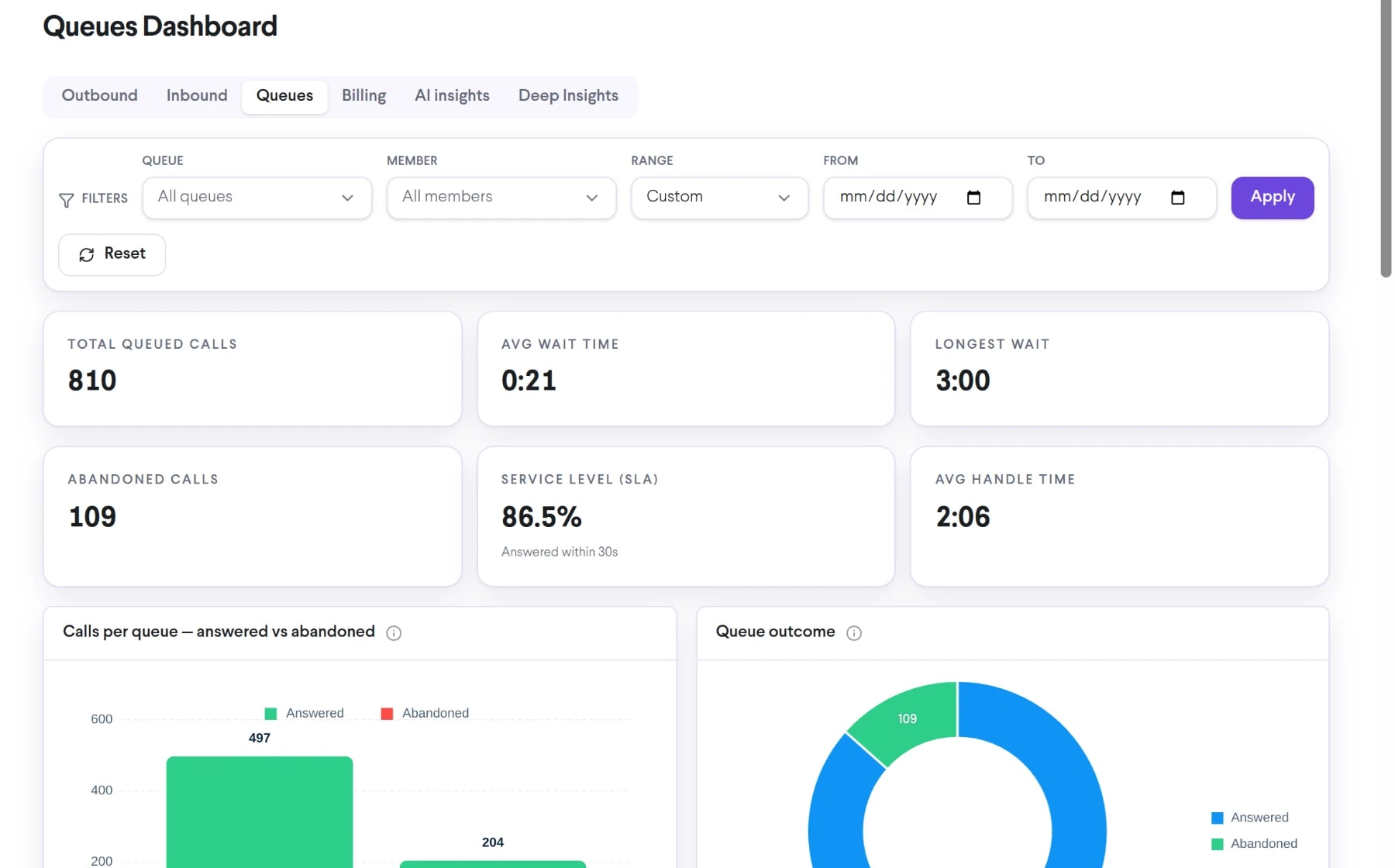
The queues dashboard shows queued calls, average and longest wait, abandoned calls, service level and handle time for every desk, so leads can move staff before citizens give up.
- Service level (answered within 30 s)
- Abandoned calls per queue
- Filter by queue, member and date
Complaints that need a supervisor, found for you.
With AI Call Intelligence on, AI flags recorded calls where a citizen asked for a manager, threatened action or left a complaint unresolved, with the exact line. Add your own rules in plain words.
- High, Medium and Low severity
- Custom rules tested on recent calls
- Alerts by email or in a Cowork channel
AI Call Intelligence add-on on Growth and Professional: $10 per member per month, 1,500 minutes per member included, then $0.01 per minute.
See AI escalations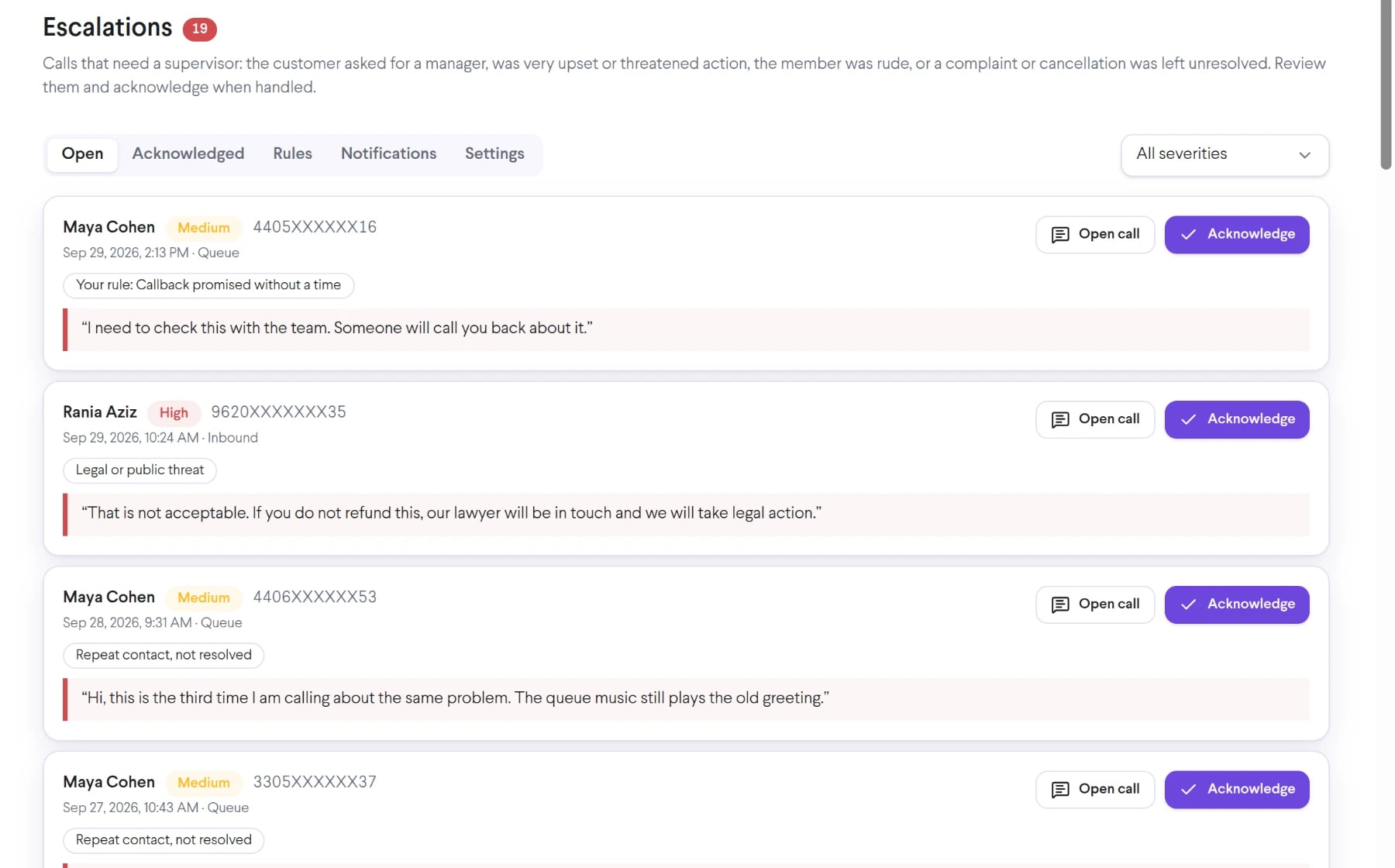
Find the calls about the same issue.
Search transcribed calls by meaning across English, Arabic, Italian, French and Spanish to see how often an issue comes up and what callers actually said.
- Exact words first, then similar meaning
- Filter by team, member and who said it
- Open the transcript and summary
AI Call Intelligence add-on on Growth and Professional: $10 per member per month, 1,500 minutes per member included, then $0.01 per minute.
See call search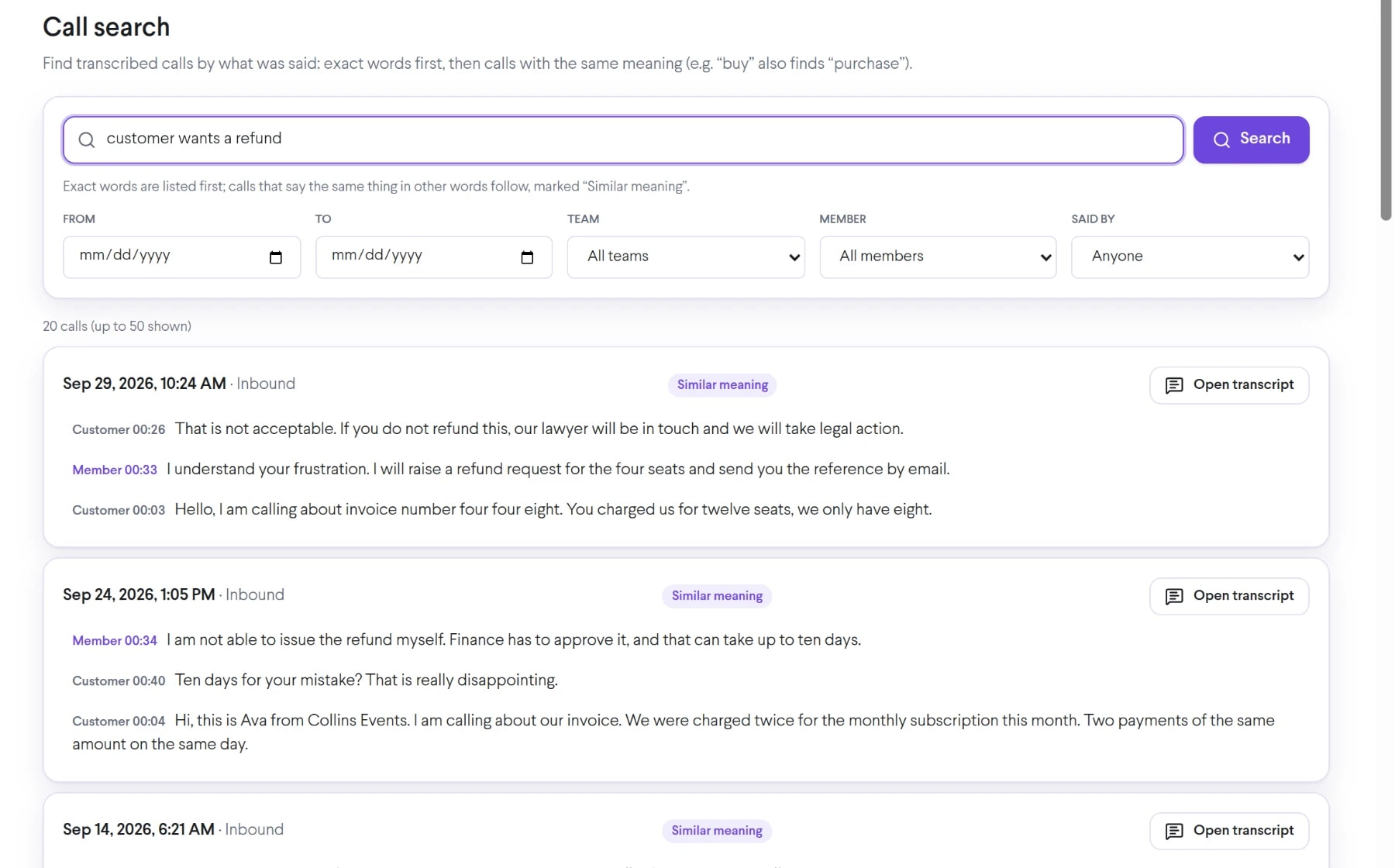
How a citizen call moves through TalkChief.
- 01
Public number rings
Working hours and holidays pick the route.
- 02
Service menu
The IVR sends the caller to the right programme desk.
- 03
Desk queue answers
Agents answer by skill and order; leads watch service level.
- 04
AI reviews the call
With AI Call Intelligence on: transcript, summary and escalations.
What we protect, and what stays your call.
Security on every plan
- AES-256 encryption at rest and TLS in transit
- Call recordings and files encrypted in object storage
- Encrypted, access-controlled databases
- Roles for admins, supervisors and agents; supervisors see only their teams
No government certification is claimed
TalkChief does not claim NCA, government-cloud or other certification. Each entity decides which security, hosting and procurement controls apply.
Security we can state
AES-256 encryption at rest, TLS in transit, recordings and files encrypted in object storage, and encrypted, access-controlled databases. TalkChief does not provide emergency calling.
You decide what is recorded and analysed
Call recording is on Growth (kept 1 year) and Professional (kept 2 years). AI transcription is switched on for the company, a team or a member, for the call types you pick; internal calls are never transcribed. Tell callers about recording and transcription as your local rules require.
Official references: Essential Cybersecurity Controls (Saudi National Cybersecurity Authority) · Implementation guides for cybersecurity controls (Saudi National Cybersecurity Authority) · Guide to the Saudi Personal Data Protection Law (Saudi Data & AI Authority)
TalkChief for government: common questions.
Plans: Essential $8, Growth $13, Professional $17 per member per month, billed annually.
Compare plansIs TalkChief certified for government workloads?
No certification is claimed. The government entity must determine applicable security, procurement, hosting, data and assurance requirements for the exact deployment.
Can several services share one citizen number?
Yes. An IVR menu on one public number can route by service and region to separate queues and teams, each with its own working hours and supervisors.
Can it support Arabic and English?
Yes. Route by language in the IVR, and with AI Call Intelligence on, recorded calls are transcribed in English, Arabic, Italian, French and Spanish, including calls that switch language mid-conversation.
Who can see recordings and transcripts?
Access follows roles for admins, supervisors and agents, and supervisors see only their teams. Recording is on Growth and Professional; AI transcription is turned on per company, team or member.
Does TalkChief provide emergency calling?
No. TalkChief does not provide emergency calling. Keep a separate path to local emergency services.

Pick up patient calls. Book the visit, even after hours.
TalkChief for healthcare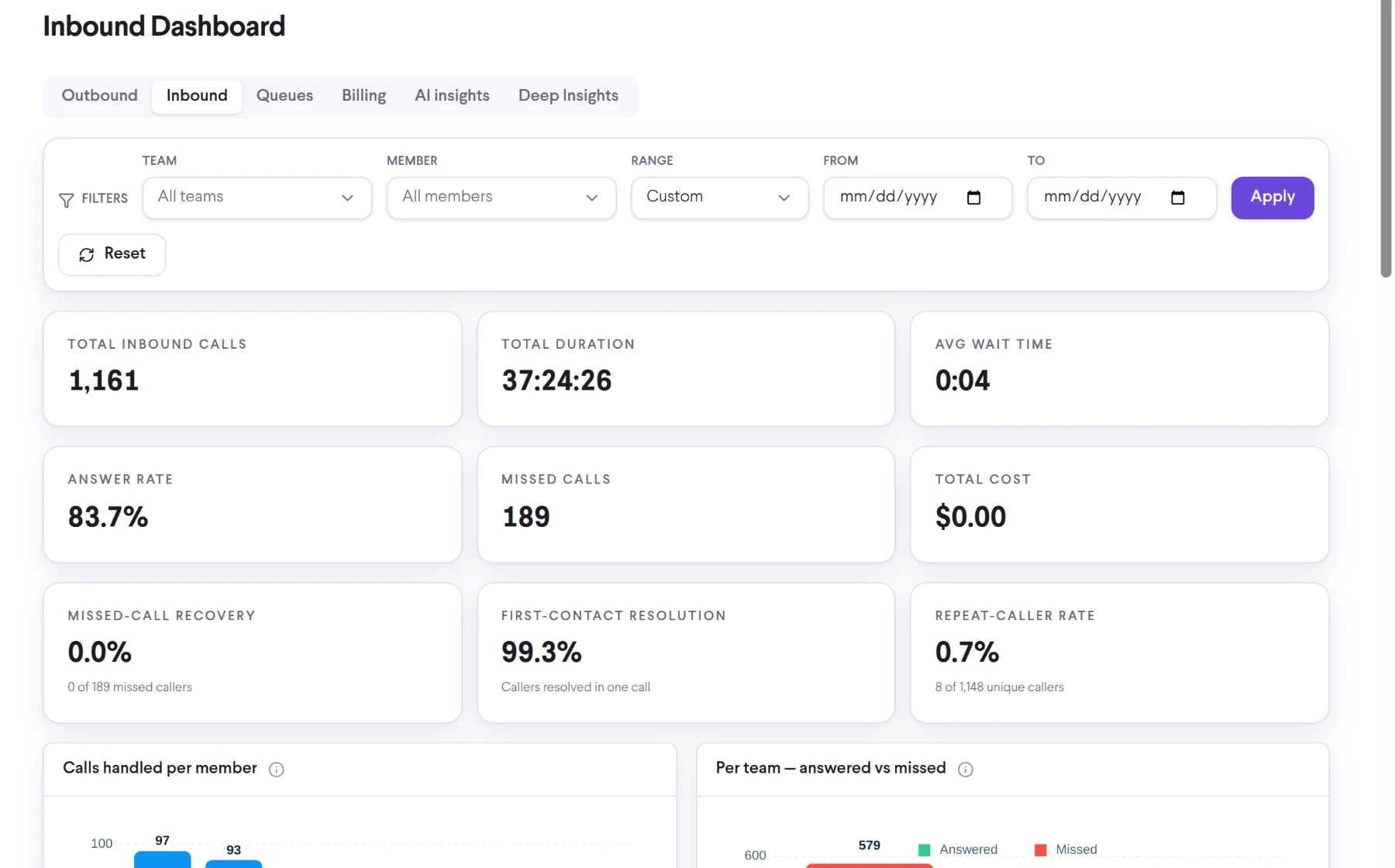
Get through admissions season with every missed call on the dashboard.
TalkChief for education