Route each property enquiry to the agent on shift.
Give every project and office its own number, route enquiries to the agent or pod on shift, log calls in your CRM and, with AI Call Intelligence on, see which agents resolve which kind of call.
7-day free trial · no card · usually verified within 1 business day · onboarding call · then set up with a number in about 2 minutes
- Numbers per project and office
- Calls logged in HubSpot, Pipedrive or Zoho
- Outbound dashboard per agent
- Coaching heatmap by call reason

Trusted by 1,000+ companies






Leads go cold while agents are at viewings.
Enquiries ring out
The listing agent is at a viewing, the call rings out, and the buyer calls the next agency.
No idea which campaign works
Portal, billboard and social leads all call the same number, so nobody knows which one paid off.
Follow-up is invisible
Managers cannot see who called back, how often, or which agents need help on objections.
What a brokerage runs on TalkChief.
Shipped features, shown with fictional demo data.
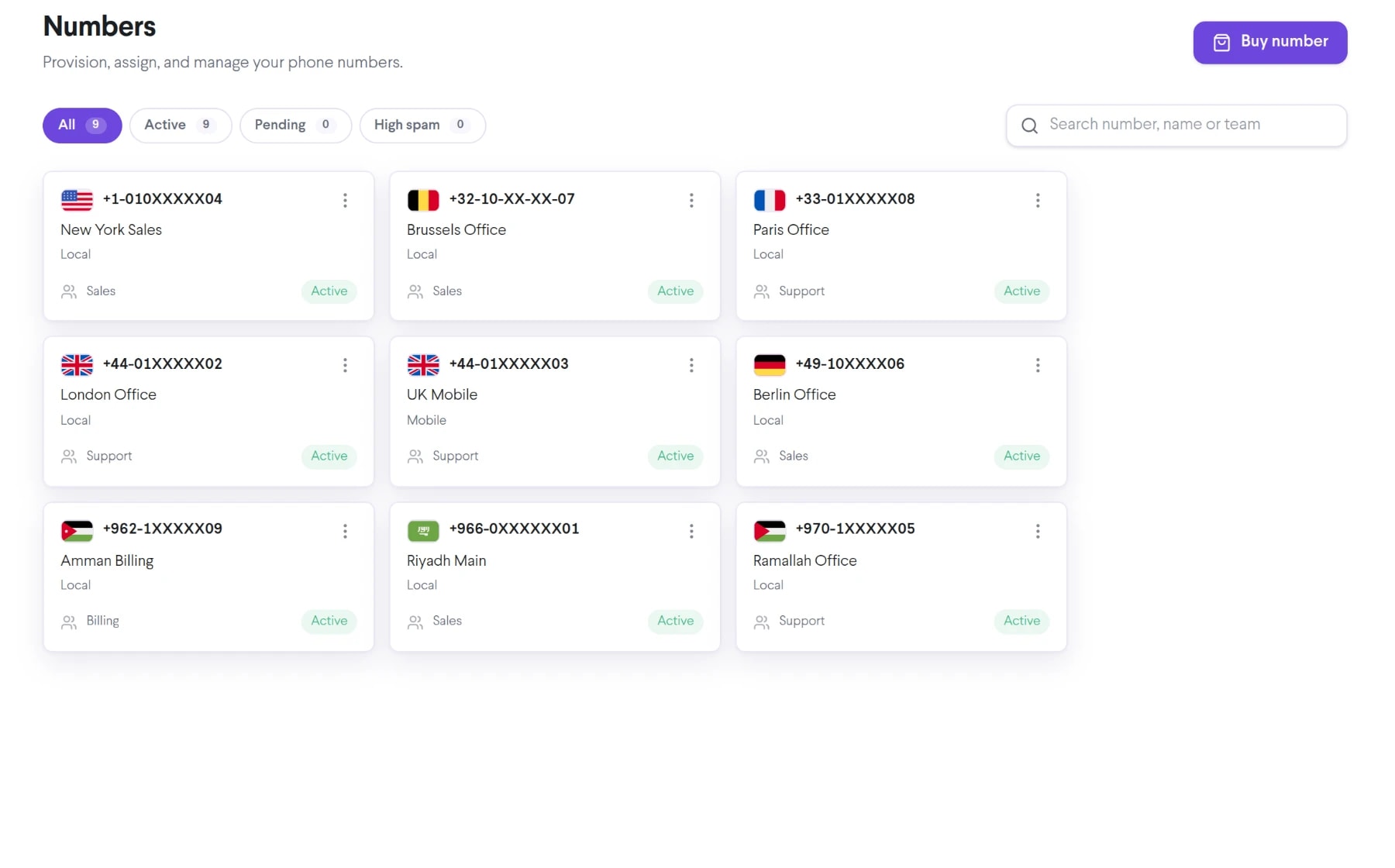
A number for every project, office and campaign.
Buy local numbers in 90+ countries (availability varies by market) and assign each to a team. Each number gets its own call flow, so a project line can ring the sales pod first and fail over to a mobile.
- Local numbers assigned to teams
- Call flow per number
- Static caller ID on all plans; random and dynamic on Growth+
Calls logged in the CRM your agents already use.
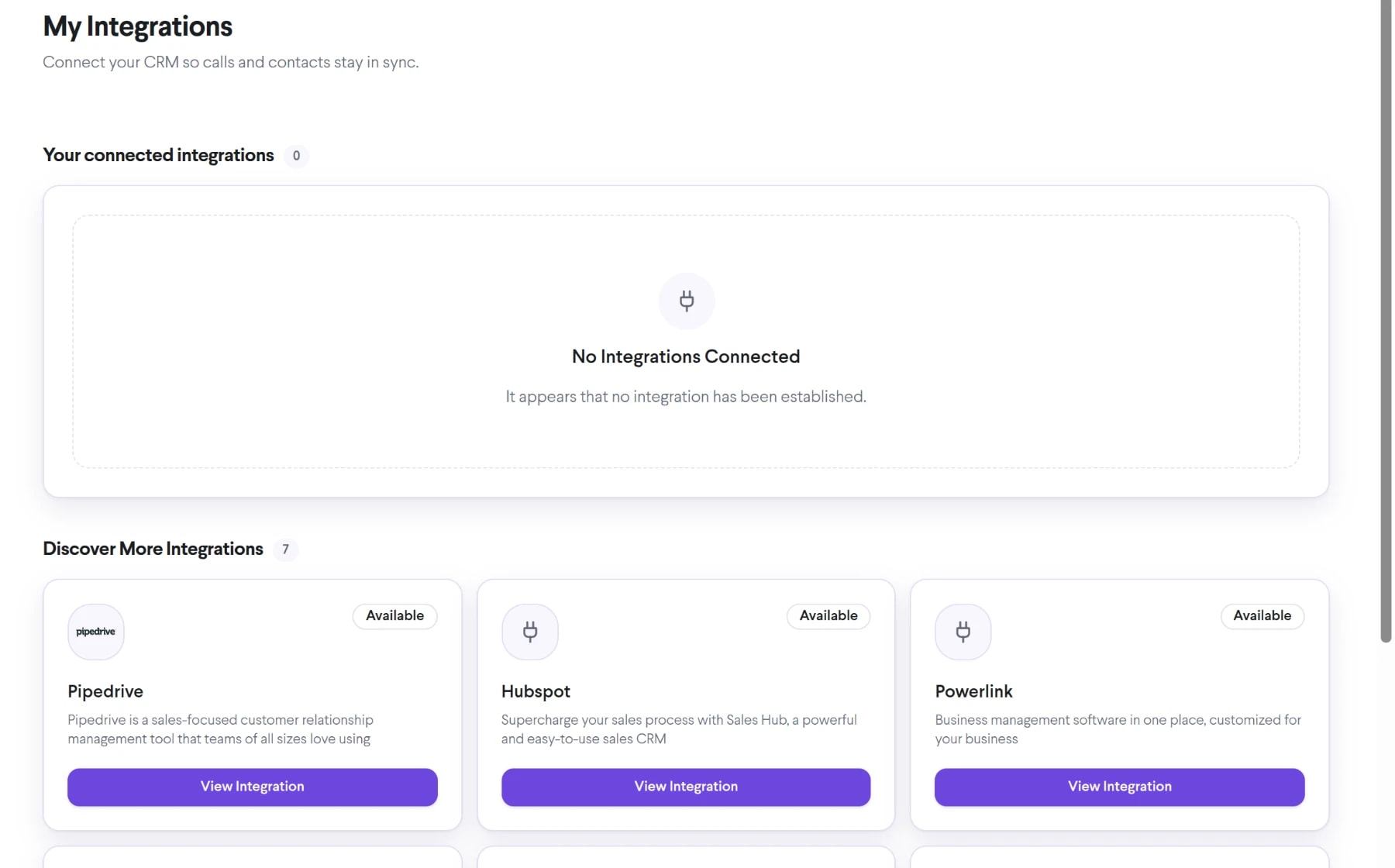
HubSpot, Pipedrive, Zoho CRM, Powerlink and Comeunity receive call activity when the integration is connected and enabled. Click-to-call works inside Zoho CRM through PhoneBridge, or through the Click-to-Call API.
- HubSpot, Pipedrive, Zoho CRM, Powerlink, Comeunity
- Zoho PhoneBridge click-to-call
- Completed-call webhooks
See who is actually calling leads back.
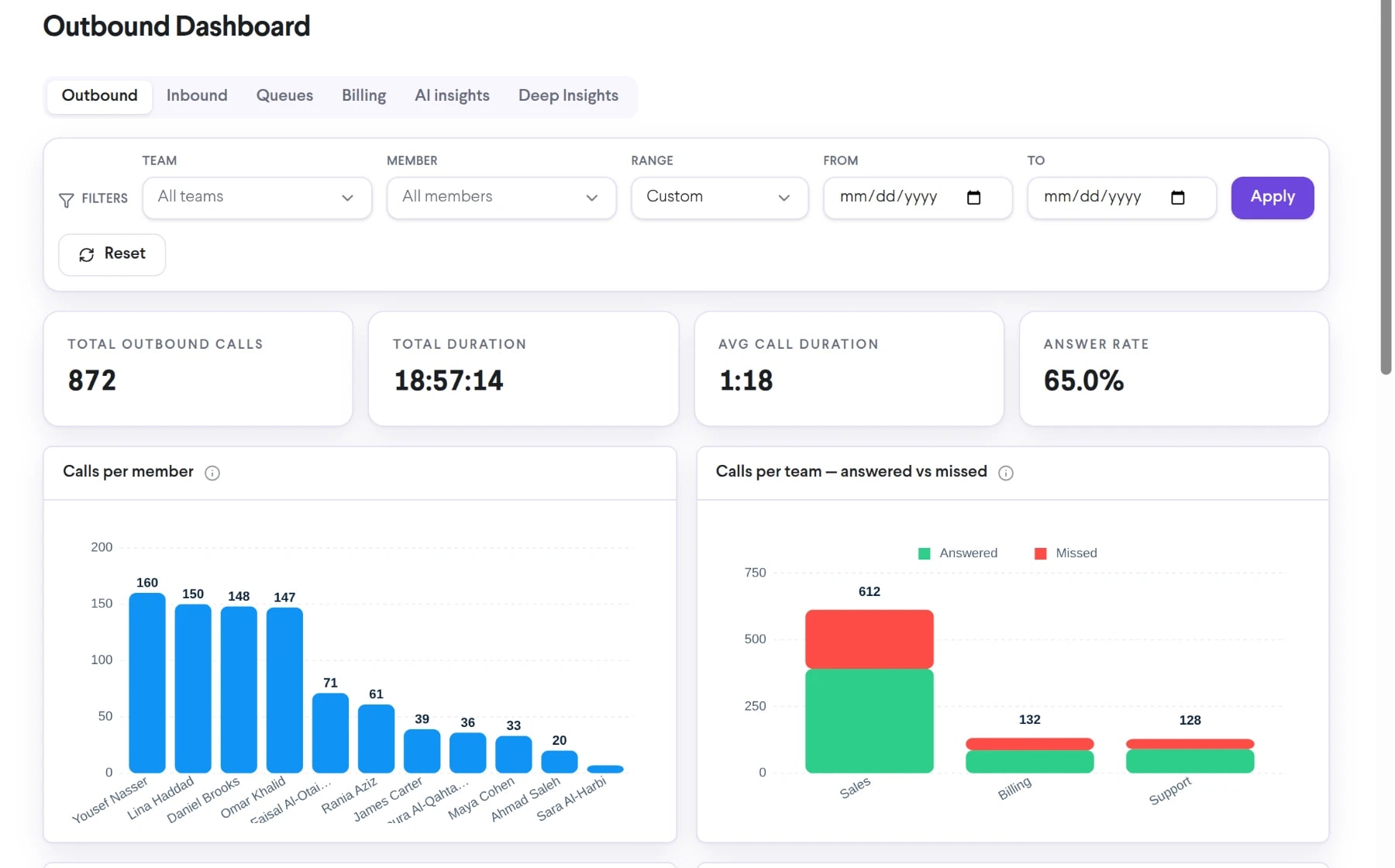
The outbound dashboard shows calls, talk time and answer rate per member and team, so a sales manager sees follow-up activity without asking for it.
- Calls per member
- Answered versus missed per team
- Filter by team, member and date
Know which agent handles which kind of call best.
With AI Call Intelligence on, Deep Insights shows resolution rate per member and call reason, so you can pair an agent who struggles on a call type with one who resolves it.
- Resolution by member and reason
- Repeat callers and their issues
- Competitor mentions and churn risk
AI Call Intelligence add-on on Growth and Professional: $10 per member per month, 1,500 minutes per member included, then $0.01 per minute.
See Deep Insights
How a property enquiry moves through TalkChief.
- 01
Project number rings
Each campaign or listing number has its own flow.
- 02
Sales pod answers
A ring group or queue reaches the agents on shift.
- 03
Failover on no answer
Forward to a mobile number or take a voicemail.
- 04
Logged in the CRM
Call activity syncs when the integration is connected and enabled.
What we protect, and what stays your call.
Security on every plan
- AES-256 encryption at rest and TLS in transit
- Call recordings and files encrypted in object storage
- Encrypted, access-controlled databases
- Roles for admins, supervisors and agents; supervisors see only their teams
Brokerage rules stay with you
TalkChief does not claim compliance with brokerage or advertising regulations. Your brokerage decides lead ownership, consent for follow-up and what may be recorded.
You decide what is recorded and analysed
Call recording is on Growth (kept 1 year) and Professional (kept 2 years). AI transcription is switched on for the company, a team or a member, for the call types you pick; internal calls are never transcribed. Tell callers about recording and transcription as your local rules require.
Official references: Real Estate Brokerage Law (Saudi Real Estate General Authority) · Implementing Regulations of the Real Estate Brokerage Law (Saudi Real Estate General Authority) · Guide to the Saudi Personal Data Protection Law (Saudi Data & AI Authority)
TalkChief for real estate: common questions.
Plans: Essential $8, Growth $13, Professional $17 per member per month, billed annually.
Compare plansCan each listing or project have a different phone number?
Yes. Buy numbers for each project, office or campaign, subject to availability in that country, and give each its own call flow and team.
Can TalkChief assign calls to the listing agent?
Yes. Route a number to a member, a ring group or a queue, with working hours and failover to a mobile or voicemail when the agent is unavailable.
Which real estate CRMs does it connect to?
HubSpot, Pipedrive, Zoho CRM and Zoho PhoneBridge, Powerlink and Comeunity receive call activity when connected and enabled. Other CRMs can use the Click-to-Call API and completed-call webhooks.
Does TalkChief guarantee faster lead conversion?
No outcome is guaranteed. TalkChief shows call activity per agent and, with AI Call Intelligence on, resolution by member and call reason; conversion is measured in your CRM.
Can agents call from their mobile?
Yes. On the Professional plan, the TalkChief Cowork apps for iOS and Android include the business phone dialer, so agents place and take business calls on their mobile with a company number as caller ID.


