AI-powered unified communications

One unifiedcommunicationsplatform for every team.

Bring team messaging, meetings, business phone, contact-center workflows, analytics, and multilingual AI into one workspace — so your team can collaborate and serve customers without switching tools.

Messaging & meetingsPhone & contact centerAnalytics & AI
ONE WORKSPACEMessaging, meetings & callsNUMBER AVAILABILITY90+ countries · qualified per marketMULTILINGUAL AIArabic · Hebrew · EnglishPLANS FROM$8/member/month · billed annually
One connected workflow

From team conversation to customer outcome, the context stays connected.

TalkChief connects how your team works, how customers reach you, and how every conversation becomes a clearer next action.

Work together

Team conversation stays connected to the work.

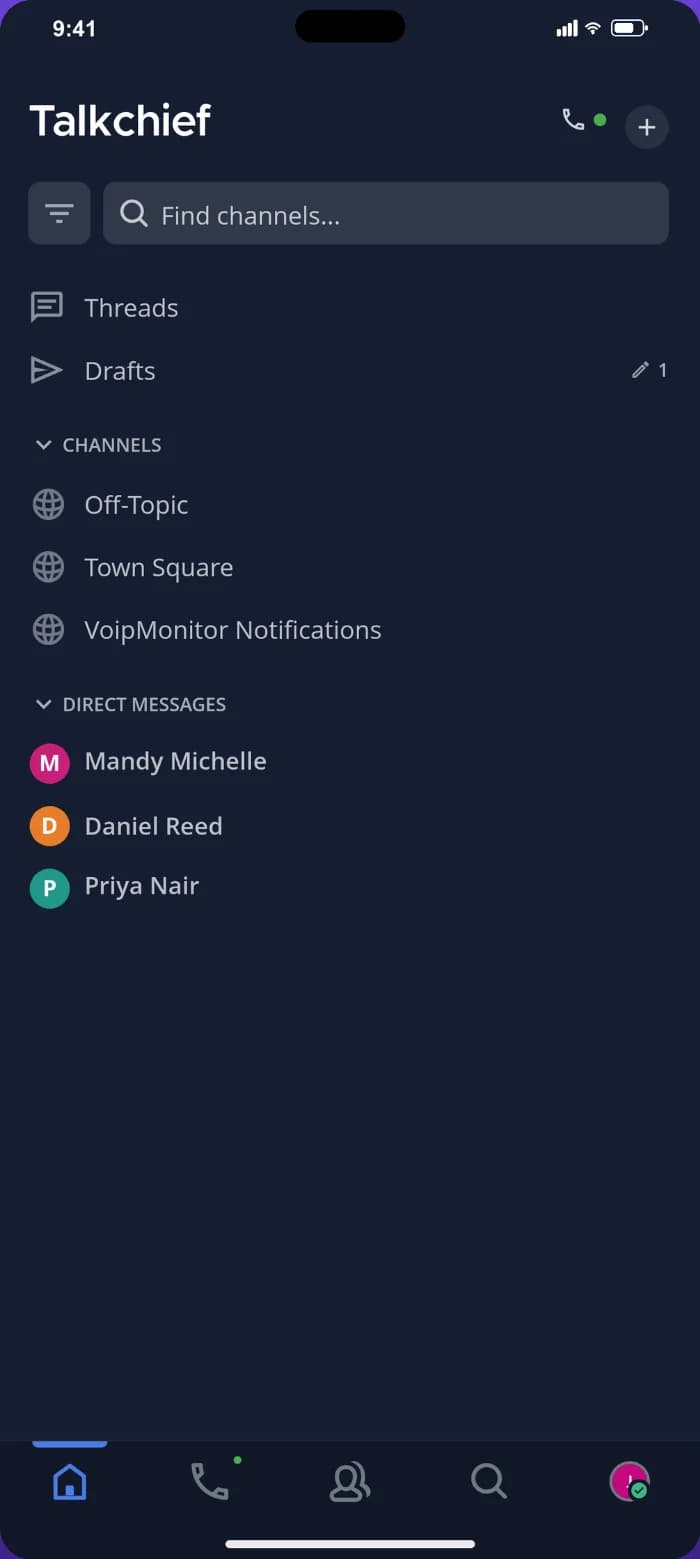
Channels, direct messages, meetings, and business calls share one workspace, so context moves with the team instead of disappearing between apps.

  • Spaces, threads, and direct messages
  • Meetings and shared call context
  • Desktop, web, and supported mobile calling
Explore TalkChief Cowork
Reach customers

Every business call starts with the right context.

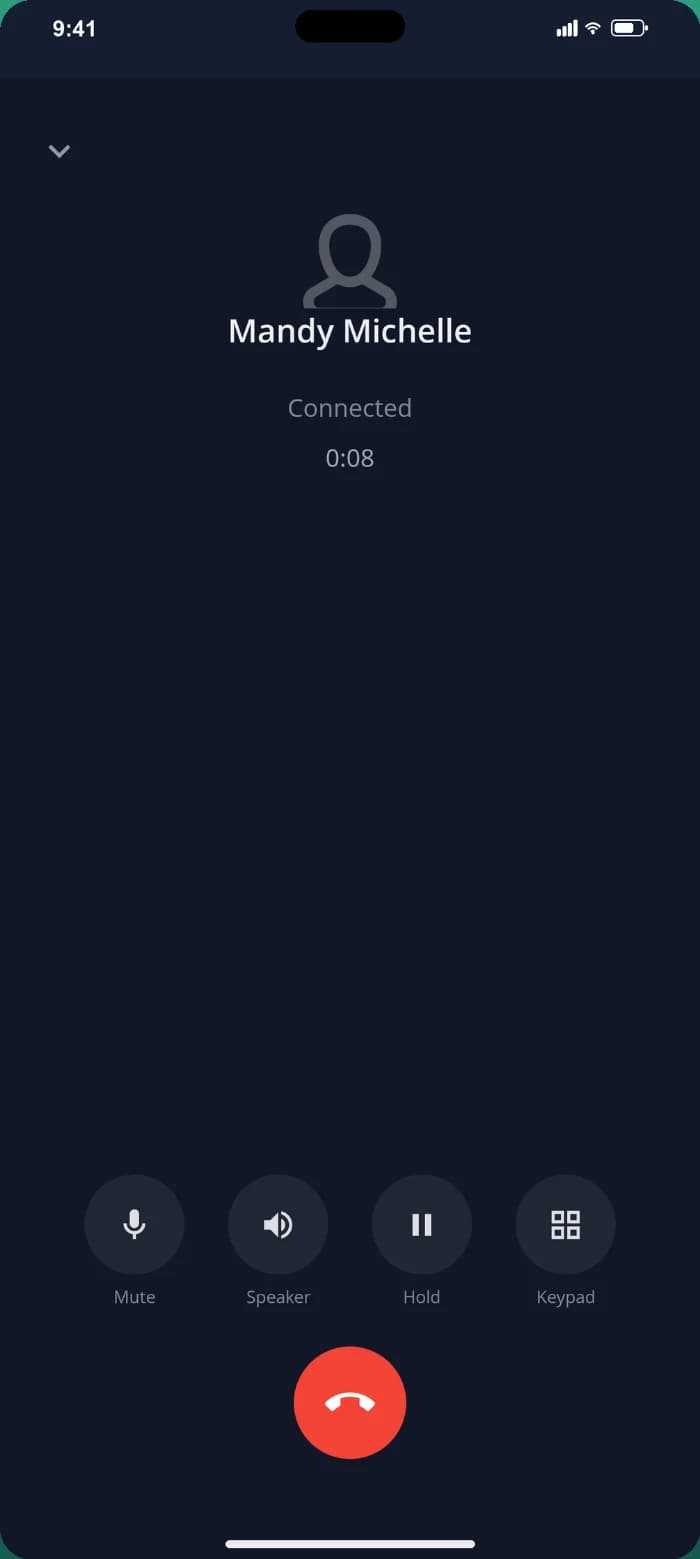
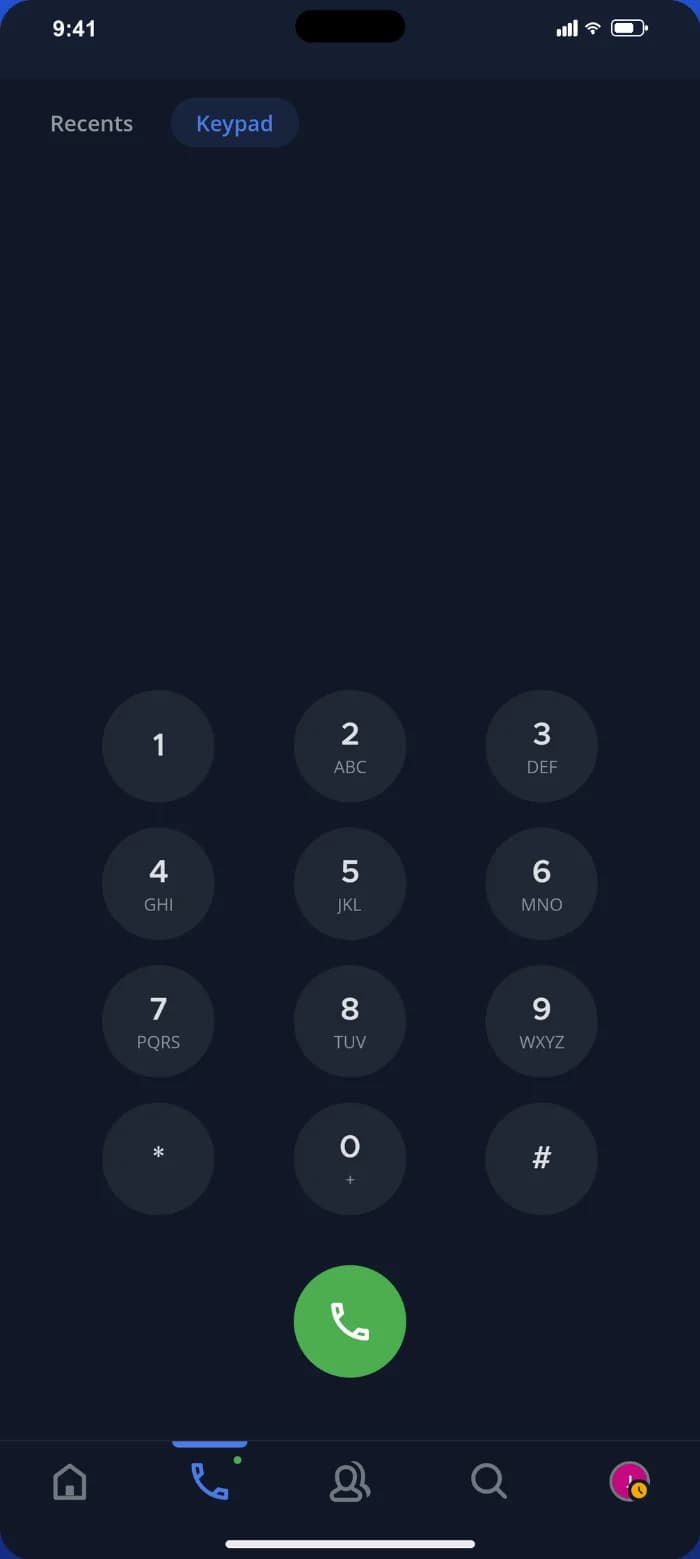
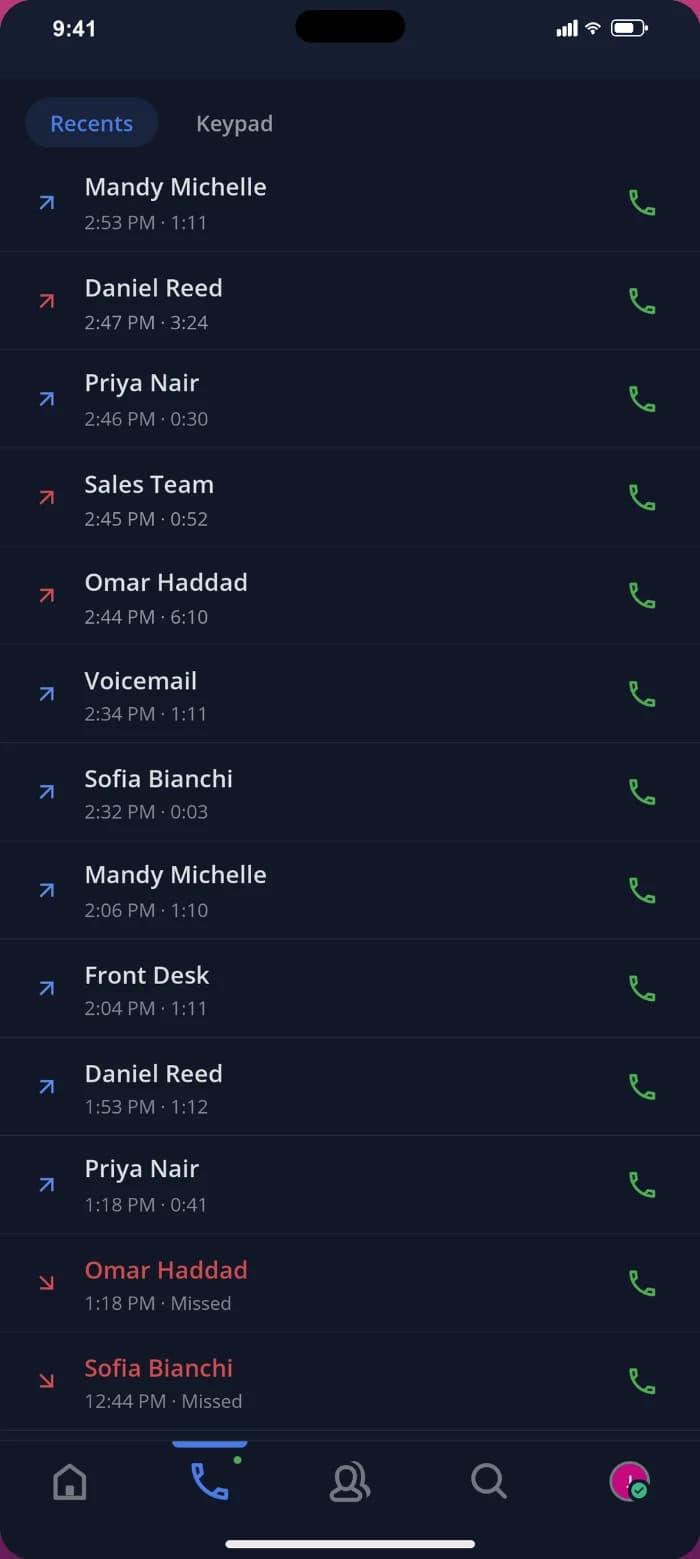
Give teams one professional calling experience across desk and mobile workflows, with business identity and conversation history close at hand.

  • Business numbers and caller identity
  • Click-to-dial and shared call history
  • Inbound and outbound calling workflows
Explore the business phone
Serve as one team

Route, answer, and coach as one operation.

Queues, IVR, routing, live monitoring, and coaching give customer-facing teams a shared operating view from first ring to resolution.

  • Skill-based and time-based routing
  • Visual call flows and queue visibility
  • Live monitoring, coaching, and recording
Explore contact center software
Turn talk into action

Every conversation becomes a clearer next action.

Communications analytics, multilingual transcripts, summaries, and action items make performance and follow-up visible to the whole team.

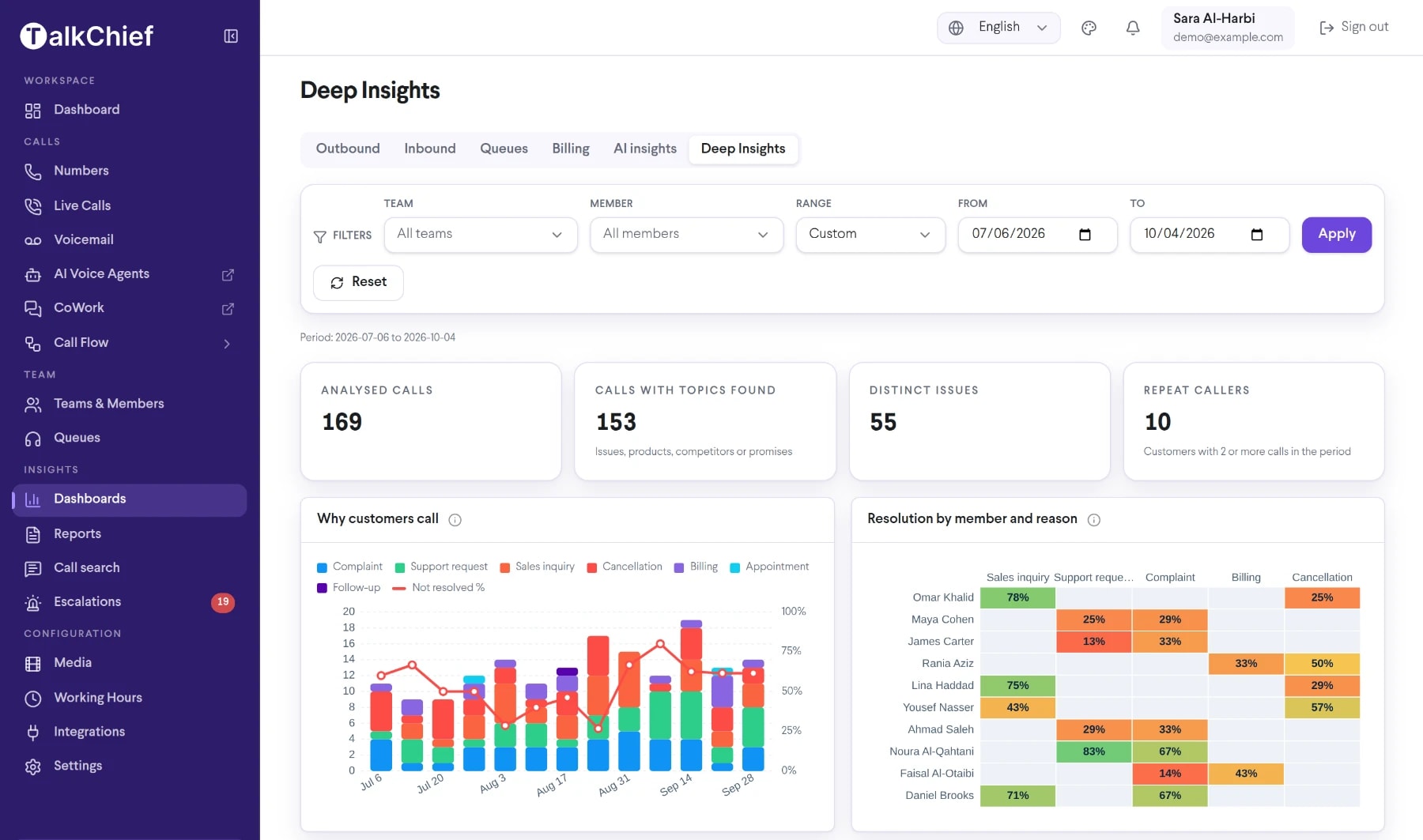
  • Inbound, outbound, queue, and billing dashboards
  • Arabic, Hebrew, and English transcription
  • Summaries and action items inside Cowork
Explore communications intelligence
Contact Center

Business phone and contact center workflows, together.

Manage everyday business calling and structured customer-service workflows from the same platform, with routing, caller identity, live coaching, and shared context.

Call Queues, Routing & IVR

Build visual call flows and use skill-based or time-based routing to connect each caller with the right team.

Human-Operated Power Dialer & Click-to-Dial

Work through planned call lists while a person starts each customer call. TalkChief does not provide automatic or predictive dialing.

Dynamic Caller ID & Spam Protection

Present an appropriate business number and support number reputation across outbound workflows.

Monitoring, Coaching & Recording

Support agents during live calls and keep recordings and voicemail available according to your plan.

Analytics & Billing

Analytics that show how every team and conversation performs.

See inbound and outbound activity, answer patterns, queue performance, and communication costs in dashboards built for operators and team leaders.

AI + connected workflows

From conversation to action, with a clearer path.

Turn Arabic, Hebrew, and English conversations into searchable context, clear follow-up, and insight that can move between TalkChief, Cowork, your CRM, and your own tools.

Clearer follow-up

Put the next action where the team already works.

Per-speaker transcripts, summaries, and action items keep important customer context close to the people responsible for what happens next.

ASSIGNED ACTIONUpdate CRM seats and billing access
Noor A.
  • Per-speaker diarization
  • Mixed-language auto-detection
  • Cowork summaries and action items
Connected by design

Keep customer and conversation context moving.

Connect TalkChief with your CRM, help desk, and scoped workflows through supported integrations, APIs, and webhooks.

PipedriveHubSpotZohomonday.comShopifyMicrosoft TeamsVtiger
Global number availability

Global calling, with deeper connectivity across the GCC.

TalkChief documents number availability across 90+ countries, backed by direct KSA and GCC connectivity, provider partnerships in Israel, and broad US coverage. Availability depends on country, number type, documentation, permitted use, provider delivery, and regulation.

90+
Number availability across 90+ countries, qualified for your deployment.Availability depends on country, number type, documentation, permitted use, provider delivery, and regulation.
Review number availability
Plans from $8 per member

Plans that scale with your team.

Start with essential business calling, add interactive analytics as you grow, and bring Cowork plus real-time operations together on Professional.

Essential$8/member/month

Business calling and core reports

Growth$13/member/month

Interactive dashboards and advanced routing

Professional$17/member/month

Cowork, real-time visibility, and coaching

EnterpriseCustom

Tailored volume, reporting, retention, and onboarding

Prices shown are billed annually. Phone numbers and usage charges are separate; availability and rates vary by destination.

FAQ

Unified communications FAQs.

What is a unified communications platform?
A unified communications platform brings team messaging, meetings, business phone, and related workflows into one connected experience. TalkChief also connects contact center operations, analytics, and multilingual AI.
Can TalkChief combine team collaboration and business calling?
Yes. TalkChief Cowork combines channels, direct messages, presence, meetings, and business calling in one workspace. Cowork availability depends on the selected plan.
Does TalkChief transcribe calls in Arabic and Hebrew?
Yes. The AI Transcription API produces diarized per-speaker transcripts and auto-detects Arabic, Hebrew, and English — including calls that switch language mid-sentence.
How much does AI call transcription cost per minute?
$0.025 per minute with a one-minute minimum, then prorated per second. Delivered transcripts are billed; failed jobs are not.
Can I get a local phone number in Saudi Arabia or the UAE?
TalkChief provides local business numbers across KSA, the GCC, and more than 90 markets, subject to local availability and regulatory requirements.
Which TalkChief plans include communications analytics?
Calls and financial reports start on Essential. Interactive dashboards are included on Growth, while Professional adds a real-time calls dashboard.
Can TalkChief connect with our CRM and internal tools?
Yes. TalkChief supports CRM and help-desk integrations, plus Click-to-Call, CDR webhooks, and an OpenAPI specification for custom workflows.
Definitive buyer and implementation guide

Unified communications: one accountable path from conversation to action.

Use the TalkChief homepage as the canonical owner for the connected suite: business voice, Cowork collaboration, contact-center operations, analytics, supported AI, and integrations—qualified by the real customer workflow rather than an “all-in-one” slogan.

Quick answer

What the decision means

Unified communications brings calling and adjacent team workflows into one service model. Its value is not a long list of voice, messaging, meeting, contact-center, analytics, AI, and integration features; it is preserving identity, context, ownership, and evidence across them. TalkChief spans business calling, Cowork, contact-center operations, analytics, multilingual AI, and integration paths. Each plan, endpoint, number, provider route, data obligation, and custom requirement still needs qualification.

Use this guide when you need to
  • Reduce friction between business calling, team collaboration, customer-service operations, reporting, and follow-up.
  • Create one clear buying and operating model for distributed teams across GCC, Israel, the United States, and wider markets where qualified.
  • Evaluate a suite without hiding endpoint, carrier, number, regulatory, integration, or data boundaries.

Decision outcome: A suite map showing the TalkChief owner for each outcome, external dependencies, and evidence required before migration.

Architecture

Unification happens at the workflow and governance layers.

A shared login is not enough. Connect an approved identity to call policy, the responsible team, relevant context, and an observable next action.

  1. 01
    Business identity and provider path

    An approved number, extension, or application identity begins the conversation. Number supply, inbound and outbound routes, caller-ID treatment, and market obligations remain qualified scopes.

  2. 02
    TalkChief business calling

    Cloud call control applies users, permissions, schedules, IVR, groups, queues, forwarding, voicemail, and eligible caller identity to the customer journey.

  3. 03
    Cowork and contact-center work

    Channels, messages, presence, conferences, queue operations, supervision, recording policy, and analytics can keep the responsible people close to the conversation.

  4. 04
    AI and connected systems

    Approved transcription, reviewed summaries, Click-to-Call, CDR webhooks, CRM workflows, and scoped custom engineering can move context into action without treating automation as truth.

  5. 05
    Evidence and accountability

    Access reviews, call and event records, measures, incidents, costs, and controlled changes show whether the suite improves the outcome.

Boundary to confirmTalkChief does not support emergency calls or standalone SIP trunking. First-party endpoints are Windows, macOS, and web; iOS and Android use supported third-party SIP softphones. Do not infer number inventory, provider authority, endpoint parity, SLA, topology, or universal integration from “unified communications.”

Definition

Unify the operating journey, not every tool category at any cost.

A useful UCaaS decision starts with handoffs that currently lose time, context, or ownership. It then selects the smallest connected capability set that fixes them.

For a sales team, the journey might begin with an approved click-to-call action, use the right business identity, create a completed-call event, and leave an owned follow-up. For service, it may begin with a number and IVR, move through a queue to an eligible agent, support supervision and recording policy, and produce an operational signal. For a distributed team, Cowork can keep channels, messages, presence, conferences, calling, and reviewed outcomes near the people doing the work.

TalkChief provides these areas as a SaaS suite, but unification does not erase product or responsibility boundaries. Confirm the plan and role for Business Phone, Cowork, Contact Center, analytics, AI, integrations, and developer interfaces. Confirm providers, numbers, endpoints, networks, recording authority, data, and support separately. Keep another service where the qualified TalkChief design does not cover a required route or special use.

EvidenceTalkChief product overviewTalkChief CoworkTalkChief contact-center software

Service boundaries

Keep the regional voice path and the SaaS workflow equally visible.

Unified communications can centralize call policy and work context, but public-network delivery remains a market-specific provider service with its own commercial, operational, and regulatory boundaries.

For each country, document whether the requirement is to call a destination, obtain a local or toll-free number, receive inbound calls, present an approved identity, port an existing number, or retain a customer-provider relationship. These are different scopes. A broad country count or regional headline cannot answer whether one number type is available to one customer for one permitted use. The deployment record should identify the responsible provider model, documents, allowed traffic, rates, support handoff, and current validation date.

Apply the same discipline to endpoints. TalkChief provides first-party Windows and macOS applications and a browser workspace. Supported third-party SIP softphones provide eligible iOS and Android calling. The mobile vendor, operating system, provisioning, background behavior, update lifecycle, diagnostics, and feature surface differ from the first-party clients. Assign a tested endpoint profile to each worker group rather than writing “works everywhere” into requirements.

Continuity also crosses boundaries. Identify what happens when a user is offline, an access network fails, a number route is impaired, an integration cannot accept an event, or a configured call path is wrong. Some outcomes can use an approved alternate route or delayed workflow; others need a customer continuity process or a separate service. TalkChief does not support emergency calls, so every worker location needs an approved emergency path outside TalkChief. Do not publish a topology, automatic-failover, availability, or provider-quality claim without deployment-specific evidence.

EvidenceTalkChief product overviewTalkChief supported appsITU-T E.164 numbering plan

Governance and resilience

Operate the suite as one service without creating one oversized trust zone.

Shared workflows should simplify ownership, not flatten permissions. Voice, collaboration, customer records, recordings, AI output, and integration credentials each deserve an explicit access and lifecycle decision.

Define joiner, mover, and leaver handling across TalkChief members, numbers, teams, queue roles, supervisor access, recordings, reports, Cowork spaces, API keys, connectors, webhook receivers, and AI destinations. Use least privilege and separate duties where the risk justifies it. A user who can answer a queue does not automatically need recording downloads; a channel member does not automatically need customer transcripts; a desktop user does not need a server integration credential. Review access on a fixed cadence and after organizational change.

Treat every connected system as a failure and data boundary. Keep integration credentials on approved server-side systems, limit them to the required purpose, and define correlation, duplicate handling, retry, monitoring, retention, and downstream incident ownership. Use descriptive placeholders when documenting integration patterns and never publish a live or complete API endpoint, credential, customer identifier, or production payload. A custom workflow is production software: it needs version ownership, change testing, support, maintenance, and an agreed retirement path.

Build an evidence standard that crosses teams. A voice issue needs a call identifier and time, direction, parties, user, endpoint, network, route, symptom, expected result, and related change. A connected-workflow issue adds an event correlation, processing outcome, retry state, destination owner, and customer impact. The service review should convert that evidence into controlled decisions, then verify the outcome after change instead of allowing separate vendors to exchange unsupported assumptions.

EvidenceNIST SP 800-207: Zero Trust ArchitectureTalkChief developer platformTalkChief integrations

Pricing factors

Model the complete service.

  • Members, billing term, and plan mix for Business Phone, Cowork, Contact Center, analytics, retention, supervision, AI, integration, onboarding, and support.
  • Numbers, provider delivery, porting, documentation, usage by real destination mix, forwarding, toll-free, taxes, and market fees.
  • Endpoints, headsets, network readiness, supported third-party mobile SIP applications, device management, connectivity, and continuity.
  • Discovery, configuration, migration, training, security, data work, integration, testing, and scoped custom engineering.
  • AI or other usage, retained tools and special services, support, administration, monitoring, change management, and contract overlap.
Review TalkChief plans and published member pricing →
Best practices

Protect the operating outcome.

  • Start with a customer or team outcome and add only the modules that have a named owner.
  • Keep provider, number, destination, caller-ID, regulation, endpoint, data, and emergency boundaries visible.
  • Use first-party endpoint language accurately and qualify third-party mobile SIP behavior.
  • Apply least privilege to users, administrators, recordings, integrations, API keys, AI outputs, and Cowork spaces.
  • Make custom engineering a governed product lifecycle with security, support, acceptance, and maintenance.
  • Publish ROI, quality, uptime, carrier, or availability claims only when the method and evidence are approved.
Comparison framework

Choose the operating model, not the familiar label.

Each option can be valid. Compare ownership, delivery, integration, support, security, and total cost against the workflow you need.

Separate best-of-breed tools

Best when: Specialist depth outweighs the cost of integrating identity, context, data, analytics, and support.

Watch for: Duplicate administration, context loss, connector failures, inconsistent retention, and ambiguous incident ownership.

Voice-only UCaaS

Best when: The business primarily needs users, numbers, calling, and basic collaboration.

Watch for: Contact-center operations, regional delivery, analytics, AI, and ecosystem integration can remain separate or shallow.

TalkChief connected suite

Best when: Voice, Cowork, customer operations, analytics, multilingual AI, and integration need one adaptable product and support relationship.

Watch for: Qualify every plan, endpoint, provider, market, data duty, integration, and custom scope; breadth is not universal entitlement.

Implementation

Move from requirements to evidence.

The visible steps below are also projected as matching HowTo structured data.

  1. 01

    Find the broken handoffs

    Map where voice, team collaboration, customer operations, data, and follow-up lose context or ownership today.

    Acceptance evidence: A prioritized journey map with baseline, business owner, impact, and decision criterion.
  2. 02

    Map the TalkChief suite and boundaries

    Assign each need to a current product, plan, provider, endpoint, integration, custom scope, retained service, or exclusion.

    Acceptance evidence: A solution matrix with evidence owner and no unresolved requirement presented as included.
  3. 03

    Prove a connected pilot

    Test representative identities, routes, clients, queues, Cowork actions, reports, integrations, AI review, failures, and support.

    Acceptance evidence: Call IDs, event correlations, expected and observed outcomes, defects, retests, and stakeholder acceptance.
  4. 04

    Migrate in controlled stages

    Move users, numbers, and workflows through decision gates with coexistence, training, rollback, and provider coordination.

    Acceptance evidence: Cutover record, current route status, access review, communication, reconciliation, and sign-off.
  5. 05

    Operate one improvement loop

    Review customer outcomes, adoption, quality evidence, security, integration delivery, AI review, support, and cost on a fixed cadence.

    Acceptance evidence: An owned service review connecting metrics and each material change to approved evidence.
Primary and first-party references

Verify the design with current evidence.

These sources establish standards, product scope, or procurement context. They do not replace a deployment-specific TalkChief proposal or the responsible local provider’s terms.

  1. TalkChief product overviewTalkChief · reviewed August 1, 2026

    First-party description of the business phone, Cowork, contact-center, analytics, AI, voice-network, and developer product areas.

  2. TalkChief feature directoryTalkChief · reviewed August 1, 2026

    First-party directory of current calling, routing, supervision, reporting, collaboration, and AI-assisted capabilities.

  3. TalkChief supported appsTalkChief · reviewed August 1, 2026

    Current first-party endpoint statement: TalkChief for Windows, macOS, and web, with supported third-party SIP softphones for iOS and Android.

  4. TalkChief CoworkTalkChief · reviewed August 1, 2026

    First-party description of channels, direct messages, threads, presence, conferences, business calling, and reviewed AI-assisted follow-up.

  5. TalkChief contact-center softwareTalkChief · reviewed August 1, 2026

    First-party description of IVR, queues, skills and schedules, live supervision, recordings, analytics, and connected customer context.

  6. TalkChief integrationsTalkChief · reviewed August 1, 2026

    First-party overview of supported integrations and the API path for qualified custom workflows; connector behavior and entitlement vary.

  7. TalkChief developer platformTalkChief · reviewed August 1, 2026

    First-party scope for Click-to-Call, CDR webhooks, per-company API keys, AI transcription, and the downloadable OpenAPI description.

  8. TalkChief multilingual AI transcriptionTalkChief · reviewed August 1, 2026

    First-party description of diarized Arabic, Hebrew, and English transcription, mixed-language handling, API output, and current usage pricing.

  9. TalkChief plans and pricingTalkChief · reviewed August 1, 2026

    Current first-party plan, member, retention, usage, collaboration, and support information; a deployment quote remains authoritative.

  10. TalkChief Knowledge Base and FAQTalkChief · reviewed August 1, 2026

    Current first-party product FAQ, including the explicit statement that TalkChief does not support SIP trunking as a product.

  11. ITU-T E.164 numbering planInternational Telecommunication Union · reviewed August 1, 2026

    The international public numbering framework; it does not itself assign a number, authorize caller identity, or establish service availability.

  12. NIST SP 800-207: Zero Trust ArchitectureNational Institute of Standards and Technology · reviewed August 1, 2026

    Primary security guidance for resource-focused access decisions, continuous evaluation, and explicit trust boundaries.

Bring the real workflow

See whether TalkChief fits before you migrate.

We can review markets, numbers, call flows, integrations, security responsibilities, and where scoped custom engineering may close a genuine gap.

Bring your team and your calls home.

Tell us how your team works and where your customers are. We will prepare a trial workspace around the conversations that move your business.

7-day free trial · 50% off for startups & non-profits